
SCOTUS ALLOWS DISCRIMINATION AGAINST CHRISTIANITY IN NEW YORK
The United States Supreme Court yesterday decided not to review a case challenging the constitutionality of a New York City public school policy that expressly permits the display of the Jewish menorah and Islamic star and crescent during their respective religious holidays, but completely bans the display of Nativity scenes during Christmas.
The constitutional challenge was brought by the Thomas More Law Center, a national, public interest law firm based in Ann Arbor, Michigan, on behalf of Andrea Skoros and her two minor children, devout Roman Catholics, who attend the New York City's schools. The lawsuit was filed only after William Donohue, president of the Catholic League, made several unsuccessful attempts to convince school officials to allow Nativity displays alongside the other religious symbols.
The Supreme Court considered the Law Center's petition for review at seven different conferences. At the end of the day, however, by deciding not to review the case the Court passed on the opportunity to clarify its much maligned Establishment Clause jurisprudence. More fundamentally, the Court allowed to stand an anti-Christian policy that adversely affects over one million students enrolled in the Nation's largest public school system, which has 1,200 public elementary and secondary schools.
In the petition, the Law Center asked the Supreme Court to review a February 2006 decision of the United States Court of Appeals for the Second Circuit, in which a sharply divided panel upheld the constitutionally of the City's Nativity ban. The Circuit Court held that this policy of permitting Jewish and Islamic religious symbols but banning Christian religious symbols was permissible in part because it achieved a valid "pedagogical endeavor" by "us[ing] children's natural excitement about various year-end holidays to teach the lesson of pluralism by showing children the rich cultural diversity of the city in which they live and by encouraging them to show tolerance and respect for traditions other than their own."
Richard Thompson, President and Chief Counsel for the Law Center, commented, "This case presents yet another example of how federal courts are using Justice O'Connor's contrived test to cleanse America of Christianity. This unprincipled test allows judges to impose their own ideological views under the pretext of constitutional interpretation. Unfortunately, the Supreme Court refused to take up the case and remedy its flawed jurisprudence."
In a religious display cased decided by the Court in 2005, Justice Thomas echoed the sentiments of Thompson, stating, "The unintelligibility of this Court's precedent raises the further concern that, either in appearance or in fact, adjudication of Establishment Clause challenges turns on judicial predilections. . . . [A] more fundamental rethinking of our Establishment Clause jurisprudence remains in order."
Robert Muise, trial counsel for the Law Center who handled this case, was disappointed with the Court's decision, stating, "Our Constitution plainly forbids hostility toward Christians. Our Nation has a strong Christian heritage that is reflected in our traditions. One such tradition is displaying a creche during the Christmas season. New York City's Nativity ban exhibits a hostility that is contrary to our history and our Constitution. The Supreme Court should have reviewed this case."
Source
The arguments in the failed (so far) David Parker case
Lawyers for parents aggrieved over material normalizing homosexual families taught to their children, argued that the Lexington school system's refusal to permit them to withdraw their primary school-age children violated their First Amendment Rights under the US Constitution.
"The defendants have chosen to brazenly use tiny children's psyches to promote ideology over faith" said lawyers for parents David and Tonia Parker, and Rob and Robin Wirthlin. The parents' requests to compromise and withdraw their children from homosexual material and discussions in the classroom were rebuffed by school officials, who claim a "legitimate state interest" to normalise same-sex romantic relationships in the minds of schoolchildren.
The plaintiffs' attorneys responded to a motion to dismiss the case from the defendants, the town and public school system of Lexington, saying the defendants are violating "the establishment clause" and "free-exercise" clauses of the Constititution, by inculcating material subversive to the faith of the couples' children. This violates government neutrality in matters of religion and non-religion.
"The First Amendment protects religion, not secularism. Secularism may be important to combat an allegation of establishment, but secularism can never be allowed to burden faith," read the plaintiff's brief, alleging that "the government has intentionally chosen to elevate non-religious secular causes over their deep and abiding religious faith."
"The burden here is nothing short of an intentional attempt to wipe the plaintiff's faith away altogether," argued their lawyers. "The obvious and well-pleaded impressionable age of the children, combined with the State's abject unwillingness to even notify the parents that it intends to indoctrinate on these extremely personal topics virtually ensures that if the State gets its way, the Plaintiffs' children will not harbor the families' beliefs."
The lawyers explained that the parents were not concerned about the mere "exposure" to homosexual families - exposure easily obtainable from children on the playground, but instead seek to "prevent adult-initiated indoctrination or psychic imprinting." The plaintiffs' attorneys offered to provide the Court expert testimony affirming that very young children see a "transference" between parents and teachers, where they see the teacher as almost equivalent in moral authority to a parent, thus validating the parents' concern about the effect of this indoctrination on their children.
"The defendants' sole motivation is their own political determination that the Plaintiffs' faith should be eradicated, and the place to start this process is with their children", stated the couples' lawyers. "This places an enormous burden upon the parents, a small minority of believers, and the minor plaintiffs who will be emotionally conflicted and drained."
Source
Catholics slam Britain for Equality Act's "Violation of Religious Liberty"
Say Britain poised to overturn centuries of legal development in human rights
In comments preceding the upcoming international congress, "Conscience in Support of the Right to Life," the president of the Pontifical Academy for Life said Britain is poised to overturn centuries of legal development in human rights. Bishop Elio Sgreccia told reporters the provisions of the Equality Act that claim to defend human rights, are a "violation of liberty." The Equality Act's Sexual Orientation Regulations will make it illegal to deny goods or services based on sexual orientation, including adoption of children. "I think that conscientious objection is fully justified and I would be surprised if a nation, such as Great Britain, usually considered as the homeland of fundamental liberties, would deny at least on one occasion recognition of this objection," Bishop Sgreccia said. Zenit Catholic news agency quoted the bishop saying, "I hope this won't take place or that, in any case, it will trigger an appeal before the Court of Human Rights."
Responding to the same legislation, the bishop of the Scottish diocese of Paisley wrote in a pastoral letter that there is "something sinister" happening in Britain. "For the first time in the modern era in this country, the Catholic Church is facing the prospect of being forced to act against her faith and against her convictions, or else face legal challenge and possible prosecution."
In a four-point manifesto, Bishop Tartaglia said the Church has no desire to unjustly discriminate against homosexual persons, but said that "no one has the right to be an adoptive parent," and that Catholic adoption agencies base their decisions on the belief that children are best served by being adopted by "a mother and father who are married."
The bishop urged his flock to be prepared spiritually for persecution. "We are so much at home in contemporary society that we have probably not seen this coming." "Affluence, prosperity, aspiration and a pervasive spirit of relativism may tempt some to set aside the principles and values of the Catholic faith and life." He warned Catholics, however, not to allow the Christian voice to be pushed "to the margins of society." "This unfortunate episode may well herald the beginning of a new and uncertain time for the Catholic Church in the United Kingdom."
Source
Atheists' Attacks on Bush Administration's Faith-Based Initiatives Hurting the Poor
Anti-religious groups claim program is evidence of the establishment of a "theocracy"
The Freedom From Religion Foundation (FFRF), a lobby group working since 1978 to abolish government-supported expression of religious belief, is preparing to make oral arguments in the Supreme Court for its high-profile lawsuit against the Bush administration's faith-based social initiatives.
The Foundation will argue, beginning February 28, that the Administration violated the Establishment Clause by organizing national and regional conferences at which the faith-based organizations were allowed to discuss how they can meet the social needs of their communities. The tone at some of these conferences, the Foundation complains, resembled a "revival" meeting at which typically participants pray and openly acknowledge the existence of God.
Since their start in 2001, the government's Faith-Based Community Initiatives have been under steady attack by anti-religious groups who claim that the program is evidence of the establishment of a "theocracy." The government's claim, however, is that smaller organizations run by churches and other local religious groups are better placed to help and understand the needs of individuals than are large, top-heavy government bureaucracies.
Research by the Pew Forum on Religion in Public Life has found that "a solid majority of Americans (66%) favour allowing churches and other houses of worship to apply, along with other organizations, for government funding to provide social services."
The FFRF, a "national association of nontheists," says its goals are to "promote freethought (sic) and to keep state and church separate." The group supports a totally secularized public environment as well as euthanasia, under the rubric of "death with dignity," and unlimited publicly funded abortion.
The Foundation's litigation successes in the past have included the abolition of a state Good Friday holiday, the ending of bible instruction in public schools and the removal of Ten Commandments monuments and crosses from public land.
The results of some of their public interest lawsuits, however, have been decried as a campaign against freedom of religious expression that has backlashed on the poor.
The Associated Press quotes Jordan Lorence of the Alliance Defense Fund (ADF), a group filing briefs in support of the government's initiatives, who said of the group, "They are successful in the sense that they have disrupted government funding for faith-based initiatives. But real people with real problems are no longer getting help because of some of their lawsuits."
Source
Wednesday, February 28, 2007
Tuesday, February 27, 2007
Normal British bureaucratic bungling blamed on "racism"
I think the ladies deserve compensation for their treatment but there have been plenty of cases of whites getting similar treatment from immobile and wasteful bureaucracies. Putting someone on nil duties is a standard bureaucratic way of getting that person to resign
The Home Office has been branded "one of Britain's least impressive managements" after an employment tribunal ruled that two interpreters were subjected to years of sexual and racial discrimination. The department now faces a bill of up to 2.3 million pounds to compensate the two women, who claimed they would have been treated differently if they had been white men.
The tribunal found that they suffered systematic discrimination because of the procrastination of the Immigration and Nationality Directorate, and accused more than 100 human resource staff of mismanagement. The attack came at a hearing in London yesterday into the claims of Marti Khan, 48, who is fluent in various Indian languages, and Odette King, 57, who speaks Farsi. Both worked in Terminal 3 at Heathrow but also travelled to other airports to translate for new arrivals and at detention centres.
The tribunal found that the women had been effectively redundant since 1990, when the Home Office outsourced interpreting to freelances. Officials failed to reassign them to other roles and though they were contracted to work 41 hours a week, they were paid to do nothing or asked to carry out basic clerical duties. They could have remained in that position until retirement had they not complained to managers. Their complaints about the lack of work and that freelances were paid more were ignored by senior officials. They were signed off sick and placed on paid leave but after writing to Charles Clarke, then the Home Secretary, they were dismissed from their 25,000-a-year jobs.
Jeremy McMullen, tribunal judge, ruled that the women were unfairly dismissed and condemned their treatment by the directorate, which John Reid, the Home Secretary, branded "not fit for purpose" last year. The judge said: "What happens when one of Britain's least impressive managements, by its sole consistent attitude of procrastination, drives two long-service Asian women to become uncooperative and dismissive? The answer is systemic race and sex discrimination against them and dismissals unfair according to every tenet in the canon."
Mrs Khan, of Heston, West London, is claiming 970,000 in compensation, including 682,000 for loss of her career, 60,000 for injury to feelings and 30,000 aggravated damages. Mrs King, of Barnes, southwest London, is seeking 550,000, including 302,000 for the loss of her career. Imtiaz Aziz, their lawyer, said the panel could increase any award by 50 per cent to reflect the Home Office's breach of statutory grievance procedures. Both women are also seeking an order that the Home Office find them jobs, although this would cut the compensation.
Mrs King said after the hearing: "This has never been about money for either of us and we feel vindicated by the judge's damning ruling. We just want to have jobs in the Home Office and are prepared to work in any capacity."
Mrs Khan said that her department had been like a "ghetto" by the time she and Mrs King were short of work. "It was a total waste of taxpayers' money to pay me to do nothing whilst at the same time employing [others] at 50 per cent more than my hourly rate to undertake the tasks."
The Home Office claims that relations with the two women have broken down irretrievably and says that they acted unreasonably in rejecting job offers before they were dismissed. The panel is expected to announce how much compensation each woman will receive next month.
Source
The pain of being a conservative at the BBC
If you want to see BBC man in his natural habitat you must travel to the unpromising reaches of Wood Lane in west London, the corporation's spiritual heartland. You can learn a lot about the organisation from pavement level. Your eye will certainly be drawn to the familiar outline of Television Centre (known as "the centre" by BBC types), but you will also take in the massy new development which squats by the elevated section of the Westway. This is known - in irritating coinage - as the "media village" and its imposing size and confident design telegraph to the observer that this organisation is a leviathan.
With its proliferating television and radio channels the corporation is easily the country's most important media organisation. It reaches into every home, is many people's constant companion, and shapes and moulds opinion in ways that we hardly understand. Its stated ambition is to become the most "trusted media organisation in the world" and given its glittering reputation for quality, accuracy and fairness we might think that it has already realised that aim.
However, after 25 years as a BBC reporter I concluded that I could not trust it. Auntie has moved away from its nonpartisan ideals to championing progressive causes. And that is a distorting prism through which to see the world.
Back to pavement level. As you stand there outside the Tube at White City, BBC people course past you. They swing into work with their interesting bags and clothes, no two alike. In this respect, at least, the BBC does fulfil its royal charter obligation to balance: no style goes unrepresented. But their colourful plumage camouflages a more insidious conformity. For with membership of the tribe comes adherence to a set of well defined political beliefs, distinctly inclined to the left.
These convictions are not made explicit to the outsider; the line for public consumption is that the BBC has no line. But this is moonshine; it takes very strong editorial positions which are consistent and clear. There is no central diktat, for instance, insisting that all employees believe that George Bush is an idiot and that the American religious right threatens world peace. But you would find few BBC people who would dissent from such views.
Why should this be so? First, the majority of BBC employees share similar backgrounds: they are middle-class arts graduates of liberal outlook. Second, the internal political culture within the corporation's newsrooms is well defined and subtly coercive. It was Lord Macpherson, in his inquiry into the Stephen Law-rence murder, who alerted us to the possibility that organisations can develop institutional deformations; in the case of the Metropolitan police it was racism. In the case of the BBC, by precise analogy, it is leftism.
When I first joined the BBC in the 1970s I accepted all this as the natural order. In BBC Scotland where I worked in the 1980s there was a suffocating anti-Thatcher consensus. As it happened, I was the business and economics correspondent and I had become convinced that Thatcherite economics were necessary and actually worked. These heretical views were looked upon askance; most of my colleagues thought I was just winding them up. "You don't really believe that, do you?" they would sometimes ask plaintively. I nearly came to blows with one producer (who later rose to prominence at BBC Westminster) because he would not accept that Thatcherism was a legitimate political creed at all.
The anti-Thatcher bias was sometimes jaw-dropping. In 1984 I returned to my office in Scotland having covered the Tory conference in Brighton at which the Grand hotel was bombed by the IRA. "Pity they missed the bitch," one of my colleagues commented. When I moved to London I found things were just as bad. If you find yourself working alongside well educated, intelligent and agreeable people it can be uncomfortable to be the dissenting voice. As one producer described it, you almost feel part of an ethnic minority. I remember a planning meeting at The Money Programme where we were discussing privatisation. I offered up the Thatcherite orthodoxy; there was a pause of the kind you get when someone has made an audible bodily function at a dinner party and then I was politely ignored.
Try making a reasoned argument against abortion, single parenthood or comprehensive education - or in favour of the Iraq war - at the BBC and see how much progress you make.
Of course none of this would matter if it was merely about the discomfiture of a handful of misfit conservatives in the BBC's ranks. But it is much more serious than that. The fact is that the BBC's internal political culture profoundly colours its news output. The corporation's public stance has always been that it is fair, evenhanded and nonpartisan. Sadly the reality is different.
Of course the convictions of individual journalists have a bearing on what is broadcast. How could that not be so? For it to be otherwise BBC journalists would need to display a judiciousness that would be remarkable in the judiciary itself. All journalism is about selection: which story to cover, which to ignore, who to interview and which bits of it to use in the finished piece. At every stage journalistic judgment comes into play. As consumers of news, we should all be aware that the BBC's news agenda is only one among many; it is fallible, partial and hugely influential. Scripts are often as opinionated as any editorial in The Guardian.
There will be many, I'm sure, who will immediately object and fly to the BBC's defence when I claim that the corporation's journalism consistently favours the Labour party and the liberal left generally. They will point especially to the Iraq war, Andrew Gilligan, Lord Hutton et al. Surely that proves the corporation is robustly independent? Er, no, actually. What was striking to me while working on the Today programme was how rapidly a doom-laden BBC line emerged about the war; from the very outset Today and the rest of the corporation were instinctively and viscerally opposed to military action. When I suggested that our coverage was skewed, the programme's editor told me: "That's a very dangerous view."
The BBC's stance had consequences. I believe it reduced even further the slim chance that military action would prove effective, for the combined might of the BBC's suasion was committed from the outset to proving that the war was a disaster and Tony Blair a liar (just think what effect that had on opinion both in Britain and around the world). The loss of public support, orchestrated by the BBC, has been a grievous handicap for the war party. The only reason the BBC bet the farm on Gilligan was that it passionately wanted to believe that not only was the war wrong but that the government had lied through its teeth. Inconveniently Hutton found otherwise, not that this altered the BBC's conviction that, really, it was right all along.
The BBC is too big and important an institution for the situation to be allowed to persist. The first step towards a remedy must be for the corporation itself to acknowledge that it has a problem. There are plenty of BBC people, including senior and well known individuals, who will do exactly that in private. But it is essential that the BBC breaches the omerta - the code of silence - and fesses up in public. Then some practical steps could be taken. Bias not only stifles public debate, it is also destructive for the corporation.
In the late 1990s my colleagues had elected me to the BBC forum, designed to improve communication between management and staff. At one meeting in December 2000 I suggested to Greg Dyke, then the director-general, that there should be an internal inquiry into bias. Dyke, a Labour party donor and member, mumbled a muddled reply. As he left the meeting I overheard him demand of his PA: "Who was that f*****?"
"Diversity" is a concept much venerated within the BBC and yet my diverse political view was never respected. Dyke labelled the institution "hideously white", but skin colour is not the only diversity issue. There is a need for some kind of reasonable balance between people of differing political complexions. It is striking, for instance, that whereas I could name a long list of senior BBC journalists with left-wing antecedents, I cannot think of a single one from the right.
It is time that the BBC started hiring journalists from the right, not as a token presence but as part of the mainstream. And it would not be a bad thing if, like London policemen, BBC producers and reporters got "diversity training" that sensitised them to the problem. A more radical change would be to go for a market solution. No one demands that newspapers should be nonpartisan; readers are allowed to choose the one that chimes with their outlook. Why should broadcasting be different?
Fox News in America challenged the old networks and showed there was a big appetite for such a service. But entry costs are very high. Why not take, say, 2% of the BBC's revenue (a tasty 60 million pounds) to establish a rival service? Wouldn't it be refreshing to have a real alternative to Radio 4? The BBC has demonstrated it cannot be all things to all men; perhaps it is time for a change.
Source
Britain: The other e-petition -- about forbidden photographs
A Hampshire photographer has taken a stand against the suspicion and restrictions snappers face due to the 'paedophile panic'.
E-petitions are getting popular. Recently 1,633,894 people (and counting) signed a petition on the British government’s 10 Downing Street website opposing the idea of road-pricing. And it’s not only drivers who are using the system to make their point.
On 14 February, a petition against restrictions on photography was started by Simon Taylor, a 43-year-old semi-professional photographer from Hampshire, England (1). The petition says: ‘We the undersigned petition the prime minister to stop proposed restrictions regarding photography in public places.’ Since he launched the e-petition it’s received over 4,000 signatures. News about his petition is even on the front page of the current issue of Amateur Photographer magazine (2).
The ‘more details’ section of the webpage fleshes out Taylor’s point: ‘There are a number of moves promoting the requirement of “ID” cards to allow photographers to operate in a public place. It is a fundamental right of a UK citizen to use a camera in a public place; indeed there is no right to privacy when in a public place. These moves have developed from paranoia and only promote suspicion towards genuine people following their hobby or profession.’
What the ‘moves’ are is not stated, although admittedly there’s very little room to offer much information in the e-petition ‘more details’ box. So I ring Taylor to get more information. He points out that there are a number of disturbing instances where photographers are being told (wrongly) that they can’t photograph groups of people and scenes in public places by child protection officers, security guards, London Eye officials and police officers. Sometimes photographers have been told to delete their photographs. He’s written about some of the cases on his website, where there are also more details about the petition (3).
Photographers have also been asked for identity cards or proof that they are members of a photography club or a professional photography organisation, as if only officially approved photographers should be allowed to take pictures. Taylor believes everyone should be able to take pictures in public places, regardless of their professional status. He argues that, if anything, photographers should carry cards which highlight their rights, the ones that are the same as any other citizen.
As his website notes: ‘I and many photgraphers like me are getting increasingly frustrated at the restrictions that are imposed upon us, suspicion we suffer and the incorrect assumptions that are made.’ (4) As he tells me over the phone, ‘if I point my large camera at a child there will be people who instantly say “he’s a paedophile“‘.
And yet, even though Taylor thinks anyone should be allowed to take photographs in public, he supports the policy that says people who care and work closely with children should be submitted for checks by the Criminal Records Bureau. The Safeguarding Vulnerable Groups Act, which passed through the UK Parliament last year, will require every adult who works with children (millions of people) to submit to such CRB checks. But as Josie Appleton, author of the Manifesto Club’s report The Case Against Vetting, points out, 10million people have been CRB-vetted since 2002, despite the fact that cases of adults physically harming children are rare. All of this only helps to stoke the paedophile panic, the culture of paranoia about adults near children, which Taylor says he is trying to challenge (5).
Also, Taylor is mistaken in believing that there is no legal right to privacy in a public place. Unfortunately, such is the closing down of public space these days, there is such a legal right. ‘Privacy’ has already been used to place curbs on the freedom of professional photographers. For example, in 2004, the European Court ruled that Princess Caroline of Monaco did have a right to go shopping free from being snapped by paparazzi cameras. Anyone can use this precedent in Britain - where the European Convention on Human Rights (ECHR) and European Court rulings are recognised - to argue in court that they, too, have a reasonable expectation of privacy in public places (see Princess of Privacy, by Tessa Mayes).
The media must be free to photograph events in public as part of communicating information in a democracy. When the courts allow journalists to argue as a legal defence that their work is ‘in the public interest’, it is a recognition of the fact that the media help to facilitate an important democratic right for all of us to know what’s going on in the world.
Taylor’s petition raises important questions about freedom of the press and the stifling impact of fear and suspicion on journalism and investigation, or just on pursuing a hobby. Unfortunately, it also highlights that e-petitions are fairly limited in the extent to which they can develop debate and push for change.
Source
I think the ladies deserve compensation for their treatment but there have been plenty of cases of whites getting similar treatment from immobile and wasteful bureaucracies. Putting someone on nil duties is a standard bureaucratic way of getting that person to resign
The Home Office has been branded "one of Britain's least impressive managements" after an employment tribunal ruled that two interpreters were subjected to years of sexual and racial discrimination. The department now faces a bill of up to 2.3 million pounds to compensate the two women, who claimed they would have been treated differently if they had been white men.
The tribunal found that they suffered systematic discrimination because of the procrastination of the Immigration and Nationality Directorate, and accused more than 100 human resource staff of mismanagement. The attack came at a hearing in London yesterday into the claims of Marti Khan, 48, who is fluent in various Indian languages, and Odette King, 57, who speaks Farsi. Both worked in Terminal 3 at Heathrow but also travelled to other airports to translate for new arrivals and at detention centres.
The tribunal found that the women had been effectively redundant since 1990, when the Home Office outsourced interpreting to freelances. Officials failed to reassign them to other roles and though they were contracted to work 41 hours a week, they were paid to do nothing or asked to carry out basic clerical duties. They could have remained in that position until retirement had they not complained to managers. Their complaints about the lack of work and that freelances were paid more were ignored by senior officials. They were signed off sick and placed on paid leave but after writing to Charles Clarke, then the Home Secretary, they were dismissed from their 25,000-a-year jobs.
Jeremy McMullen, tribunal judge, ruled that the women were unfairly dismissed and condemned their treatment by the directorate, which John Reid, the Home Secretary, branded "not fit for purpose" last year. The judge said: "What happens when one of Britain's least impressive managements, by its sole consistent attitude of procrastination, drives two long-service Asian women to become uncooperative and dismissive? The answer is systemic race and sex discrimination against them and dismissals unfair according to every tenet in the canon."
Mrs Khan, of Heston, West London, is claiming 970,000 in compensation, including 682,000 for loss of her career, 60,000 for injury to feelings and 30,000 aggravated damages. Mrs King, of Barnes, southwest London, is seeking 550,000, including 302,000 for the loss of her career. Imtiaz Aziz, their lawyer, said the panel could increase any award by 50 per cent to reflect the Home Office's breach of statutory grievance procedures. Both women are also seeking an order that the Home Office find them jobs, although this would cut the compensation.
Mrs King said after the hearing: "This has never been about money for either of us and we feel vindicated by the judge's damning ruling. We just want to have jobs in the Home Office and are prepared to work in any capacity."
Mrs Khan said that her department had been like a "ghetto" by the time she and Mrs King were short of work. "It was a total waste of taxpayers' money to pay me to do nothing whilst at the same time employing [others] at 50 per cent more than my hourly rate to undertake the tasks."
The Home Office claims that relations with the two women have broken down irretrievably and says that they acted unreasonably in rejecting job offers before they were dismissed. The panel is expected to announce how much compensation each woman will receive next month.
Source
The pain of being a conservative at the BBC
If you want to see BBC man in his natural habitat you must travel to the unpromising reaches of Wood Lane in west London, the corporation's spiritual heartland. You can learn a lot about the organisation from pavement level. Your eye will certainly be drawn to the familiar outline of Television Centre (known as "the centre" by BBC types), but you will also take in the massy new development which squats by the elevated section of the Westway. This is known - in irritating coinage - as the "media village" and its imposing size and confident design telegraph to the observer that this organisation is a leviathan.
With its proliferating television and radio channels the corporation is easily the country's most important media organisation. It reaches into every home, is many people's constant companion, and shapes and moulds opinion in ways that we hardly understand. Its stated ambition is to become the most "trusted media organisation in the world" and given its glittering reputation for quality, accuracy and fairness we might think that it has already realised that aim.
However, after 25 years as a BBC reporter I concluded that I could not trust it. Auntie has moved away from its nonpartisan ideals to championing progressive causes. And that is a distorting prism through which to see the world.
Back to pavement level. As you stand there outside the Tube at White City, BBC people course past you. They swing into work with their interesting bags and clothes, no two alike. In this respect, at least, the BBC does fulfil its royal charter obligation to balance: no style goes unrepresented. But their colourful plumage camouflages a more insidious conformity. For with membership of the tribe comes adherence to a set of well defined political beliefs, distinctly inclined to the left.
These convictions are not made explicit to the outsider; the line for public consumption is that the BBC has no line. But this is moonshine; it takes very strong editorial positions which are consistent and clear. There is no central diktat, for instance, insisting that all employees believe that George Bush is an idiot and that the American religious right threatens world peace. But you would find few BBC people who would dissent from such views.
Why should this be so? First, the majority of BBC employees share similar backgrounds: they are middle-class arts graduates of liberal outlook. Second, the internal political culture within the corporation's newsrooms is well defined and subtly coercive. It was Lord Macpherson, in his inquiry into the Stephen Law-rence murder, who alerted us to the possibility that organisations can develop institutional deformations; in the case of the Metropolitan police it was racism. In the case of the BBC, by precise analogy, it is leftism.
When I first joined the BBC in the 1970s I accepted all this as the natural order. In BBC Scotland where I worked in the 1980s there was a suffocating anti-Thatcher consensus. As it happened, I was the business and economics correspondent and I had become convinced that Thatcherite economics were necessary and actually worked. These heretical views were looked upon askance; most of my colleagues thought I was just winding them up. "You don't really believe that, do you?" they would sometimes ask plaintively. I nearly came to blows with one producer (who later rose to prominence at BBC Westminster) because he would not accept that Thatcherism was a legitimate political creed at all.
The anti-Thatcher bias was sometimes jaw-dropping. In 1984 I returned to my office in Scotland having covered the Tory conference in Brighton at which the Grand hotel was bombed by the IRA. "Pity they missed the bitch," one of my colleagues commented. When I moved to London I found things were just as bad. If you find yourself working alongside well educated, intelligent and agreeable people it can be uncomfortable to be the dissenting voice. As one producer described it, you almost feel part of an ethnic minority. I remember a planning meeting at The Money Programme where we were discussing privatisation. I offered up the Thatcherite orthodoxy; there was a pause of the kind you get when someone has made an audible bodily function at a dinner party and then I was politely ignored.
Try making a reasoned argument against abortion, single parenthood or comprehensive education - or in favour of the Iraq war - at the BBC and see how much progress you make.
Of course none of this would matter if it was merely about the discomfiture of a handful of misfit conservatives in the BBC's ranks. But it is much more serious than that. The fact is that the BBC's internal political culture profoundly colours its news output. The corporation's public stance has always been that it is fair, evenhanded and nonpartisan. Sadly the reality is different.
Of course the convictions of individual journalists have a bearing on what is broadcast. How could that not be so? For it to be otherwise BBC journalists would need to display a judiciousness that would be remarkable in the judiciary itself. All journalism is about selection: which story to cover, which to ignore, who to interview and which bits of it to use in the finished piece. At every stage journalistic judgment comes into play. As consumers of news, we should all be aware that the BBC's news agenda is only one among many; it is fallible, partial and hugely influential. Scripts are often as opinionated as any editorial in The Guardian.
There will be many, I'm sure, who will immediately object and fly to the BBC's defence when I claim that the corporation's journalism consistently favours the Labour party and the liberal left generally. They will point especially to the Iraq war, Andrew Gilligan, Lord Hutton et al. Surely that proves the corporation is robustly independent? Er, no, actually. What was striking to me while working on the Today programme was how rapidly a doom-laden BBC line emerged about the war; from the very outset Today and the rest of the corporation were instinctively and viscerally opposed to military action. When I suggested that our coverage was skewed, the programme's editor told me: "That's a very dangerous view."
The BBC's stance had consequences. I believe it reduced even further the slim chance that military action would prove effective, for the combined might of the BBC's suasion was committed from the outset to proving that the war was a disaster and Tony Blair a liar (just think what effect that had on opinion both in Britain and around the world). The loss of public support, orchestrated by the BBC, has been a grievous handicap for the war party. The only reason the BBC bet the farm on Gilligan was that it passionately wanted to believe that not only was the war wrong but that the government had lied through its teeth. Inconveniently Hutton found otherwise, not that this altered the BBC's conviction that, really, it was right all along.
The BBC is too big and important an institution for the situation to be allowed to persist. The first step towards a remedy must be for the corporation itself to acknowledge that it has a problem. There are plenty of BBC people, including senior and well known individuals, who will do exactly that in private. But it is essential that the BBC breaches the omerta - the code of silence - and fesses up in public. Then some practical steps could be taken. Bias not only stifles public debate, it is also destructive for the corporation.
In the late 1990s my colleagues had elected me to the BBC forum, designed to improve communication between management and staff. At one meeting in December 2000 I suggested to Greg Dyke, then the director-general, that there should be an internal inquiry into bias. Dyke, a Labour party donor and member, mumbled a muddled reply. As he left the meeting I overheard him demand of his PA: "Who was that f*****?"
"Diversity" is a concept much venerated within the BBC and yet my diverse political view was never respected. Dyke labelled the institution "hideously white", but skin colour is not the only diversity issue. There is a need for some kind of reasonable balance between people of differing political complexions. It is striking, for instance, that whereas I could name a long list of senior BBC journalists with left-wing antecedents, I cannot think of a single one from the right.
It is time that the BBC started hiring journalists from the right, not as a token presence but as part of the mainstream. And it would not be a bad thing if, like London policemen, BBC producers and reporters got "diversity training" that sensitised them to the problem. A more radical change would be to go for a market solution. No one demands that newspapers should be nonpartisan; readers are allowed to choose the one that chimes with their outlook. Why should broadcasting be different?
Fox News in America challenged the old networks and showed there was a big appetite for such a service. But entry costs are very high. Why not take, say, 2% of the BBC's revenue (a tasty 60 million pounds) to establish a rival service? Wouldn't it be refreshing to have a real alternative to Radio 4? The BBC has demonstrated it cannot be all things to all men; perhaps it is time for a change.
Source
Britain: The other e-petition -- about forbidden photographs
A Hampshire photographer has taken a stand against the suspicion and restrictions snappers face due to the 'paedophile panic'.
E-petitions are getting popular. Recently 1,633,894 people (and counting) signed a petition on the British government’s 10 Downing Street website opposing the idea of road-pricing. And it’s not only drivers who are using the system to make their point.
On 14 February, a petition against restrictions on photography was started by Simon Taylor, a 43-year-old semi-professional photographer from Hampshire, England (1). The petition says: ‘We the undersigned petition the prime minister to stop proposed restrictions regarding photography in public places.’ Since he launched the e-petition it’s received over 4,000 signatures. News about his petition is even on the front page of the current issue of Amateur Photographer magazine (2).
The ‘more details’ section of the webpage fleshes out Taylor’s point: ‘There are a number of moves promoting the requirement of “ID” cards to allow photographers to operate in a public place. It is a fundamental right of a UK citizen to use a camera in a public place; indeed there is no right to privacy when in a public place. These moves have developed from paranoia and only promote suspicion towards genuine people following their hobby or profession.’
What the ‘moves’ are is not stated, although admittedly there’s very little room to offer much information in the e-petition ‘more details’ box. So I ring Taylor to get more information. He points out that there are a number of disturbing instances where photographers are being told (wrongly) that they can’t photograph groups of people and scenes in public places by child protection officers, security guards, London Eye officials and police officers. Sometimes photographers have been told to delete their photographs. He’s written about some of the cases on his website, where there are also more details about the petition (3).
Photographers have also been asked for identity cards or proof that they are members of a photography club or a professional photography organisation, as if only officially approved photographers should be allowed to take pictures. Taylor believes everyone should be able to take pictures in public places, regardless of their professional status. He argues that, if anything, photographers should carry cards which highlight their rights, the ones that are the same as any other citizen.
As his website notes: ‘I and many photgraphers like me are getting increasingly frustrated at the restrictions that are imposed upon us, suspicion we suffer and the incorrect assumptions that are made.’ (4) As he tells me over the phone, ‘if I point my large camera at a child there will be people who instantly say “he’s a paedophile“‘.
And yet, even though Taylor thinks anyone should be allowed to take photographs in public, he supports the policy that says people who care and work closely with children should be submitted for checks by the Criminal Records Bureau. The Safeguarding Vulnerable Groups Act, which passed through the UK Parliament last year, will require every adult who works with children (millions of people) to submit to such CRB checks. But as Josie Appleton, author of the Manifesto Club’s report The Case Against Vetting, points out, 10million people have been CRB-vetted since 2002, despite the fact that cases of adults physically harming children are rare. All of this only helps to stoke the paedophile panic, the culture of paranoia about adults near children, which Taylor says he is trying to challenge (5).
Also, Taylor is mistaken in believing that there is no legal right to privacy in a public place. Unfortunately, such is the closing down of public space these days, there is such a legal right. ‘Privacy’ has already been used to place curbs on the freedom of professional photographers. For example, in 2004, the European Court ruled that Princess Caroline of Monaco did have a right to go shopping free from being snapped by paparazzi cameras. Anyone can use this precedent in Britain - where the European Convention on Human Rights (ECHR) and European Court rulings are recognised - to argue in court that they, too, have a reasonable expectation of privacy in public places (see Princess of Privacy, by Tessa Mayes).
The media must be free to photograph events in public as part of communicating information in a democracy. When the courts allow journalists to argue as a legal defence that their work is ‘in the public interest’, it is a recognition of the fact that the media help to facilitate an important democratic right for all of us to know what’s going on in the world.
Taylor’s petition raises important questions about freedom of the press and the stifling impact of fear and suspicion on journalism and investigation, or just on pursuing a hobby. Unfortunately, it also highlights that e-petitions are fairly limited in the extent to which they can develop debate and push for change.
Source
Monday, February 26, 2007
WIMBLEDON UNFAIR TO MEN
I know very little about tennis so I had to read a long way into the article excerpted below before I understood what was going on. Apparently men's tennis is of greater interest to the public than women's tennis so more people go to matches between men and more people watch men's tennis on TV. So male tennis players earn more for the tournament organizers so the organizers have always paid men more in prizemoney -- which seems fair. But it is not EQUAL! And The Left never cease in their efforts to pretend that unequal things are in fact equal. So money earned by men is now going to be taken off them to be given to women. Equal pay for work of UNequal value, in short -- just the opposite of what feminists have always claimed they want.
One of the last bastions of sporting inequality - Wimbledon's prizemoney allocation - is about to crumble. The All England Club, which has offered greater rewards to male players than women for the past 123 years, is poised to follow the Australian Open's equal pay policy. The crusty home of tennis met this week to discuss prizemoney in the face of withering fire from recent champions Venus Williams and Lindsay Davenport.
The Australian Open and the US Open have led the way in the battle for tennis equality, while the French Open employs an ad hoc approach. Roland Garros offers equal prizemoney -- but only from the quarter-finals onwards. But Wimbledon has stubbornly resisted calls to follow suit. Roger Federer last year earned $1.6 million for his fourth successive Wimbledon victory, $74,000 more than Amelie Mauresmo pocketed. Wimbledon has found itself under increasing pressure to modernise [Ancient Leftist propaganda: Leftism is "modern". Leftism is "outdated" would be more accurate] its pay scale.
The All England Club was expected to confirm a ground-breaking pay scale overnight. If so, Women's Tennis Association boss Larry Scott will have achieved one of the most monumental changes in international sport. Wimbledon has traditionally used stronger television ratings for men, especially in the early rounds, as the basis of its argument.
Reliapundit has more.
The oldest surviving bastion of Communism surrenders to reality
When Eliezer Gal arrived at Israel's first kibbutz he had already served in the Red Army as a platoon tank commander at the siege of Leningrad, escaped to West Berlin after being marked down by Stalin for the labour camps and been turned away by the British when he arrived in Palestine aboard the Jewish refugee ship Exodus. Mr Gal took a lowly job in the cow shed for 18 years and married Michal, a daughter of the kibbutz's founders, raising his family in the pastoral version of Zionist communism.
Now, aged 82, he is living one final adventure, which he and the other members of Degania call Shinui (The Change). The kibbutz has just voted to privatise itself and assume the trappings of capitalism. His verdict? "It's a lot more comfortable. We get a lot more independence, both economically and generally. "I have seen the other world, I was born in a different world. When I came here it was the real, pure communism. But I knew then that it couldn't survive forever because people abused it. "I'm only surprised that it survived for so long. I came from the Great Mother of Communism and she only lasted 70 years. We made it to nearly a hundred."
The kibbutz movement has been in crisis for more than a decade but news that its pioneer is ushering in its own version of perestroika has shaken Israel. Degania has been overrun by television news crews seeking to document the passing of a way of life that the vast majority of Israelis never experienced but which, nevertheless served to define their identity.
Kibbutznik Tzali Kuperstein, a leading promoter of Shinui, said: "Israel has passed a lot of broken milestones in recent times, with corruption in high places, resignation from the armed forces chief and investigations of our top politicians. "We found ourselves in a different way of life. We have to adjust, and the way we are going means that we will keep the kibbutz movement alive."
This is a view shared by Daniel Ben-Simon, a veteran commentator for Ha'aretznewspaper. "In order to understand Israel you have to go to Degania because it all started there," he said. "Israelis have a love-hate relationship with it because the kibbutzim were the country's security shield for so many years and their members were the brightest and the best. They ran the elite military units. All the first political leaders came from there. They were so few but so influential.
"When the poor, new immigrants began arriving, the kibbutzniks became objects of hatred, and when the movement began to collapse there was not much sympathy. But Degania is like a first child: when it became vulnerable like the rest of us we could finally afford to have some sympathy. It is a symbol of a simpler time, of what Israel once was."
Degania's members insist that they are still proud socialists. "As silly as it may sound we remain one big family," said Ze'ev Bar-Gal, Mr Gal's 43-year-old son-in-law, whose monthly income has doubled as the kibbutz's computer services manager. "What used to bother many of us was that some members were putting a lot of money into the pot and there were others giving nothing and still receiving more than the big contributors," he said.
Degania was founded in 1910 when ten men and two women rode on horseback across the River Jordan and established a camp at Umm Juni on land purchased by the Jewish National Fund. The pioneers built a defensive quadrangle of work buildings from locally quarried basalt. At the time they wrote: "We came to establish an independent settlement of Hebrew labourers, on national land, a collective settlement with neither exploiters nor exploited - a commune". Its 320 members paid their salaries into a communal account and received an allowance based on need.
A year ago the kibbutz quietly transferred to a trial system where members were paid according to ability and allowed to keep their earnings. In return, they paid for services and a "progressive" income tax destined to support the elderly and less well-off. Now The Change has been confirmed as permanent by the votes of 85 per cent of the kibbutz, an improvement on the 66 per cent who gave their consent for the one-year trial. "We have only privatised the service side, not the businesses," explained Mr Bar-Gal. "It's more a change of mentality than anything else and it has put social responsibility into people's heads."
His wife, Tamar, a third-generation kibbutznik, thinks The Change is wonderful. "I don't feel that capitalism has invaded our lives. I think that our socialism has matured. Our new rules are extremely socialistic. When my grandparents came here they couldn't live without the commune because it was hot, swampy and dangerous. But times change. Our socialism is definitely not dead."
Source
The incorrectness of SUVs
Britain: 'Chelsea tractors' [4X4s, SUVs, 4WDs] are seen as symbols of wanton environmental destruction. But class hatred, envy and gender are distorting the facts, argues Bryan Appleyard
I was queuing to pay at a motorway service station. Violence was in the air. A small, bald man, a lorry driver, was shouting at a young woman. He seemed to be angry because she and her passenger had laughed at him. He had stopped when she had stopped, specially to shout at her. But after a few tense moments his real grievance became apparent. She was driving a 4x4, a BMW, and, as his articulacy crumbled under the weight of his anger, it became clear what was the real issue: he hated her for her car.
In Richmond owners of 4x4s will soon have to pay 300 pounds a year to park their cars. Ken Livingstone, who thinks drivers of 4x4s in London are "idiots", plans to introduce a special 25 pound congestion charge. The Church says Jesus wouldn't drive a 4x4. The Alliance against Urban 4x4s continues its campaign of so-called "subvertising" - sticking fake parking tickets headlined "Poor Vehicle Choice" on the cars they hate. The alliance has also carried out "a daring protest" at Chelsea football ground aimed at the players' big 4x4s. Mothers using a "Chelsea tractor" to take their children to school are abused for their crimes of congestion and emission. If Jade Goody were a car, she'd be a 4x4. "Basically," says Sian Berry, a Green party spokesperson and central figure in the alliance, "they are a disaster for fuel economy."
Meanwhile, there is an academic campaign to establish that 4x4s are unsafe. Students from Imperial College London have watched cars at key sites in the city and discovered that drivers of 4x4s are more likely not to wear seat belts, and to use mobile phones while driving. Other studies have shown that 4x4s are more dangerous to pedestrians. Car insurers have said that 4x4 drivers are 25% more likely to be involved in an accident and are also more likely to be at fault. Each fragment of evidence is turned into a screaming headline about the iniquity of 4x4s.
These cars have become emblems of all our environmental crimes. They represent 7.5% of the UK car market and 100% of British car loathing. The very idea that in town, or even in the country, anybody should use a car in which all four wheels are driven is regarded as a crime comparable to logging the rainforests or clubbing seals. Across Europe, owners of 4x4s (or, as they are also called, Sports Utility Vehicles, or SUVs) have become eco-pariahs, malevolent planet-warmers. If you happen to be sitting in a Range Rover Sport, a BMW X5 or, worst of all, a Porsche Cayenne Turbo S in London, it is best not to catch the eyes of any pedestrian.
The environment is the issue, but not the only one. Berry admits that, if they made a 4x4 as green as a rainforest, she'd still go after them on grounds of safety. But darker forces are also at work. Class hatred is plainly expressed in much of the anti-4x4 rhetoric, as is envy. A City bonus boy driving a Cayenne is, in the eyes of many, the distillation of social injustice. The high driving position - significantly called the "command" position - and the sheer bulk of the vehicles can, to people who can't afford them, seem like the engineering of arrogance.
Sexism is also involved. It's largely women who do the school run and, if they do it in a monster SUV, the resulting congestion is seen as a peculiarly female failing. But there are two more twists of this particular knife. The 4x4 off-road tradition is, in essence, masculine. These new luxury SUVs, however, are absurdly easy to drive. In some cases you can drive over a mountain with no special skills or muscle tone. The electronics do all the work. Women, infuriatingly for some, can do the tough stuff as easily as men.
In fact, secondly, they can often do it better. As I was to learn while Land Rover's experts were giving me an off-road lesson, women are better at this surprisingly delicate art than men. They listen to their instructors and do what they are told, which for men can be as difficult as stopping to ask for directions. Off-roading often requires the driver to do exactly the opposite of what he would do on-road - selecting higher gears, using less power to preserve traction - and men find it harder to quell their instinct to go for high revs and too much power. The real fear of that man in the service station and, perhaps, of men in general when they see a woman in a powerful machine, was that he was being outclassed as a driver.
And, on the subject of 4x4s, it's a case of left and right unite and fight. Right-wing tabloids rage against 4x4s as eagerly as left-wing eco-warriors. These are not cars; these are social history.
Is the loathing of 4x4s justified? This is complex: few people fully understand the issues, the engineering or history. But the place to begin is with a figure - the amount of carbon dioxide (CO2) emitted by a car per kilometre travelled.
Atmospheric carbon is the substance most likely to end human life or, at least, our reign over the planet. We toss 27 billion tons of carbon dioxide (over 7 billion tons of pure carbon) into the air every year. This traps heat and causes global warming. The UK emits just under 2% - about 550m tons. Of this, about one fifth - 110m tons of CO2 - comes from vehicles. The critical figure for judging the green credentials of a car is, therefore, the weight of CO2 it emits.
So, for example, the Toyota Prius, with a hybrid electric-petrol drive, emits 104 grams per kilometre. The latest Land Rover Discovery diesel emits 244g. The Porsche Cayenne Turbo S emits 378g. Even this, however, does not look too bad next to the Bugatti Veyron, which emits 547g, or the Ferrari Scaglietti, which manages 475g. For perspective, a Ford Mondeo diesel emits 159g, and the European Union target for average emissions across each manufacturer's entire fleet is 130g. What these figures show is that 4x4s are, indeed, higher-than-average emitters, but they are not the highest. Fast cars are much worse. And people carriers can be pretty bad. The Chrysler Grand Voyager, for example, emits 303g. Luxury cars are just as bad. The Mercedes S600 Pullman emits 355g and the BMW 7 series rises to 337g. Why, then, are 4x4s singled out? "Because," say the weary executives at Land Rover who have heard it all before, "4x4 fits neatly into a headline."
This is fair enough. The Richmond parking scheme, for example, was universally reported as an attack on 4x4s, but in fact applied to all high-emission vehicles. The term 4x4 has supplanted "gas guzzler" as the supreme automotive shorthand of hate. It's better than mere words - it's a term that catches the eye before it engages the mind.
The rational answer is that the SUV sector has boomed. In the UK in 1996, 78,000 were sold; last year it was 176,000. This is slightly down on the year before, but, for a number of reasons, it is not clear yet whether it represents a real change. Sian Berry points out that this growth represents a reversal of the general trend towards lower-emitting cars that has persisted since the oil shocks of the 1970s. Individually, 4x4s may not be the worst offenders, but they are in danger of becoming the most numerous. Attacking 4x4s, therefore, is a way of reinstating the trend towards lower emissions and of drawing attention to the issue. The fact that 4x4 does fit neatly into a headline is a definite plus.
But there is a serious problem with this argument. At the Westminster offices of the Low Carbon Vehicle Partnership, a body that advises the government on emissions, a self-confessed "tree-hugger", Alex Veitch, hands me a chart. It tracks market share against CO2 emissions. The big peak - between 6 and 18% market share - accounts for vehicles emitting between 130 and 200g. The line drops very steeply indeed above 200, where almost all 4x4s live. In other words, if all 4x4s were taken off the road tomorrow, the effect on emissions would be minimal. The real task, as Veitch sees it, is to drive down emissions of the middle market - the Mondeos and Vectras. "If you focus on 4x4s, you miss the more important point that this is all about low-carbon cars. You might persuade people not to buy a 4x4, but they may just buy a high-emitting saloon."
But for green campaigners the demonisation of the 4x4 is the perfect strategic tool. "We've kept the debate up," says Berry. "Our school-run event really drew it to people's attention. Every time the evidence comes out, like the stuff in the BMJ [British Medical Journal], it backs up our case. Then groups like the Church of England say: what would Jesus drive? Every time it gets into the media, we've got spokesmen ready all around the country to make our case. We're not ranty eco-warriors wanting to wipe out the cars; we say, here's something silly and something can be done about it. Local radio stations feel safe having us on a phone. It's a touchstone issue."
Almost nobody, campaigners say, actually needs four-wheel drive because almost nobody uses them to go off-road. "It's for middle-class people in boring city jobs," says Berry, "who need some way of believing they could get back to nature at any time." This fantasy element would have startled the originators of four-wheel-drive cars. In spite of the current research, the truth is, four-wheel-drive cars are intrinsically safer because of their ability to cope with poor road conditions ? if they're currently less safe, then it is the drivers who are at fault. For this reason, engineers in the 1950s thought that four-wheel drive was the technology of the future.
Yet, almost from the beginning, glamour was attached to this obscure engineering device. The American wartime Jeep was just so damned sexy. "The British were used to small, round cars like the Austin 7," says John Carroll, the editor of 4x4 Magazine, "then this stark, angular thing comes along driven by guys who look like film stars. No wonder there were so many war babies." After the war this sexiness survived mostly on film and among off-road hobbyists and collectors. Carroll himself has "about 12" old 4x4s he uses for off-roading, or what petrol heads call "mud plugging". And it was for mud-plugging that in 1947, on his farm in Anglesey, Maurice Wilks, the chief designer of Rover, built the Land Rover. He had taken one look at the Jeep and was convinced he could do better.
And he did. Down at the Land Rover Experience Centre at Eastnor in Ledbury, I drove HUE166. Built at Solihull, this was the first of a pre-production batch of 48 Wilks-designed Land Rovers. It is a joy. Its drive train makes it shimmy weirdly on the road, it is noisy and slow. But there is an almost tangible rightness about it. And, when I later drove a Freelander and a Defender - the current iteration of the original "Landy" - on Eastnor's off-road circuit, I endured a blinding revelation. Serious off-roading, like sex, is about as much fun as you can have without laughing. And - a deep, dark fear, this - it may be even more like sex in that women do it better.
Four-wheel drive cars intended for road use did not take off in Britain until the Range Rover appeared in 1970. Pricey and luxurious, this was a car for the lord of the manor, to distinguish him from his gamekeeper in his original Landy. Yet it was just as capable off-road, and it had plastic seats, bungholes and a floor that was level with its sills, so that its interior could be hosed down after a day of mud-plugging.
The move to on-road four-wheel drive was accelerated by rallying technology and, crucially, by the Audi Quattro, a high-performance car that made four-wheel-drive sexy for urban hot shots with no love of mud. But it wasn't until the late 1990s that the modern 4x4 was truly born. Manufacturers like Toyota, BMW, Audi and even Porsche invaded the market with four-wheel-drive machines. Meanwhile, the Range Rover had lost its bung holes and become a stately cruiser and, in Sport form, a fast two-ton supercar.
Their main market was America, where the love of big cars endures. In fact, over there these cars weren't even seen as big. In the 1970s the US government had reacted to oil shocks by imposing fuel-consumption targets on manufacturers. These never worked. Many big cars were simply classified as trucks to escape the controls, fuel consumption did not fall, and interstates became infested by monstrous vehicles like the Cadillac Escalade, the Chevrolet Suburban or, a favourite with British footballers, the Lincoln Navigator. These scarcely came to Britain, where big 4x4s were to remain a niche, though growing, market....
If this were a novel, the blonde, hippie-ish, Tufnell Park-dwelling Sian Berry would be contrasted with tall (6ft 3in), dark, corporate Phil Popham, the managing director of Land Rover. In fact, if this were a novel, they'd probably have an inter-ideological romance. Popham joined the company in 1988, straight from a university course in business studies, and became MD last year. Laid-back and, unlike many of his type, relaxed about time, Popham has all his strategy ducks in a neat row. He has big points to make and he makes them coolly and without digression.
The first is that 4x4s are justified by their "breadth of capability" - the wet-grass gymkhana argument - and their general ability to get around. The second is the "dust-to-dust" cost argument, the true environmental cost of a vehicle from build to scrap. Large amounts of carbon are emitted when a car is built, so, with over 70% of all Land Rovers still on the road, the company can claim its green credentials are much better than emission figures suggest. The credibility of the Prius has been eroded by figures showing its dust-to-dust may be damagingly high.
The third big point is that, because of their ticklish position, 4x4-makers are reducing emissions faster than any other sector. Land Rovers are now mostly diesel. The fleet used to be 75% petrol; this year it will be 80% diesel. Diesel can cut consumption, and thus emissions, dramatically. A petrol Range Rover Sport emits 352g, a diesel 271g. Land Rover is also launching a carbon-offset scheme to offset the carbon production of new cars from build through the first 45,000 miles. Money from sales will go to Climate Care (www.climatecare.org), which will invest in carbon reduction around the world.
Mild impatience crosses the Popham features when I point out this is clear evidence that the company is rattled by the campaigners. "We are doing this in addition to substantive improvements in fuel efficiency. There must be a recognition that we're on a long path of continuous improvement." The problem with offsetting is that it is open to an obvious criticism: why not do all the beneficial offsetting things and stop emitting as well? At this point we enter the only possible future for Land Rover and, ultimately, for all car makers: new drive-train technology.
Lexus already makes a petrol hybrid SUV - the RX400h - which emits 192g, low for a big 4x4 but not that low for cars in general, and almost twice as high as the Prius. At Land Rover, Mike Richardson, a tweedy individual who reeks of old-school British engineering, is in charge of the low-emission future. Nobody will say when the company will produce its first diesel hybrid, but I suspect it will be sooner rather than later. The cost will be high. Richardson says it currently looks like 3,000 pounds per car. But it has to happen, as all the other low- or zero-emission technologies (fuel cell, all-electric) are a long way off....
There can be no doubt that the days of the high-emitting car are numbered. If you are convinced by the arguments for human-caused global warming, this is an unconditionally good thing. But the anti-4x4 frenzy has all too often been misguided, sectarian and even - as I saw in that service station - potentially violent. It is riddled with irrationality and prejudice. Yet it has succeeded in putting pressure on the car makers - and that, I suppose, was always the point.
There is another point made not by green politics nor emission figures. It is made instead by the gleam in the engineers' eyes and by the weird rapture that overcame me while driving HUE166, or while, at the wheel of a modern Defender, I peered down a vertiginous, rock-strewn slope into an icy pool of incalculable depth at Eastnor. The original Land Rover in all its iterations is possessed of something supremely pure; it provides, to make better use of BMW's slogan, the ultimate driving experience. Even Sian Berry says she never puts a fake parking ticket on a Defender. She says it's because they genuinely go off-road and they last a long time.
More here
I know very little about tennis so I had to read a long way into the article excerpted below before I understood what was going on. Apparently men's tennis is of greater interest to the public than women's tennis so more people go to matches between men and more people watch men's tennis on TV. So male tennis players earn more for the tournament organizers so the organizers have always paid men more in prizemoney -- which seems fair. But it is not EQUAL! And The Left never cease in their efforts to pretend that unequal things are in fact equal. So money earned by men is now going to be taken off them to be given to women. Equal pay for work of UNequal value, in short -- just the opposite of what feminists have always claimed they want.
One of the last bastions of sporting inequality - Wimbledon's prizemoney allocation - is about to crumble. The All England Club, which has offered greater rewards to male players than women for the past 123 years, is poised to follow the Australian Open's equal pay policy. The crusty home of tennis met this week to discuss prizemoney in the face of withering fire from recent champions Venus Williams and Lindsay Davenport.
The Australian Open and the US Open have led the way in the battle for tennis equality, while the French Open employs an ad hoc approach. Roland Garros offers equal prizemoney -- but only from the quarter-finals onwards. But Wimbledon has stubbornly resisted calls to follow suit. Roger Federer last year earned $1.6 million for his fourth successive Wimbledon victory, $74,000 more than Amelie Mauresmo pocketed. Wimbledon has found itself under increasing pressure to modernise [Ancient Leftist propaganda: Leftism is "modern". Leftism is "outdated" would be more accurate] its pay scale.
The All England Club was expected to confirm a ground-breaking pay scale overnight. If so, Women's Tennis Association boss Larry Scott will have achieved one of the most monumental changes in international sport. Wimbledon has traditionally used stronger television ratings for men, especially in the early rounds, as the basis of its argument.
Reliapundit has more.
The oldest surviving bastion of Communism surrenders to reality
When Eliezer Gal arrived at Israel's first kibbutz he had already served in the Red Army as a platoon tank commander at the siege of Leningrad, escaped to West Berlin after being marked down by Stalin for the labour camps and been turned away by the British when he arrived in Palestine aboard the Jewish refugee ship Exodus. Mr Gal took a lowly job in the cow shed for 18 years and married Michal, a daughter of the kibbutz's founders, raising his family in the pastoral version of Zionist communism.
Now, aged 82, he is living one final adventure, which he and the other members of Degania call Shinui (The Change). The kibbutz has just voted to privatise itself and assume the trappings of capitalism. His verdict? "It's a lot more comfortable. We get a lot more independence, both economically and generally. "I have seen the other world, I was born in a different world. When I came here it was the real, pure communism. But I knew then that it couldn't survive forever because people abused it. "I'm only surprised that it survived for so long. I came from the Great Mother of Communism and she only lasted 70 years. We made it to nearly a hundred."
The kibbutz movement has been in crisis for more than a decade but news that its pioneer is ushering in its own version of perestroika has shaken Israel. Degania has been overrun by television news crews seeking to document the passing of a way of life that the vast majority of Israelis never experienced but which, nevertheless served to define their identity.
Kibbutznik Tzali Kuperstein, a leading promoter of Shinui, said: "Israel has passed a lot of broken milestones in recent times, with corruption in high places, resignation from the armed forces chief and investigations of our top politicians. "We found ourselves in a different way of life. We have to adjust, and the way we are going means that we will keep the kibbutz movement alive."
This is a view shared by Daniel Ben-Simon, a veteran commentator for Ha'aretznewspaper. "In order to understand Israel you have to go to Degania because it all started there," he said. "Israelis have a love-hate relationship with it because the kibbutzim were the country's security shield for so many years and their members were the brightest and the best. They ran the elite military units. All the first political leaders came from there. They were so few but so influential.
"When the poor, new immigrants began arriving, the kibbutzniks became objects of hatred, and when the movement began to collapse there was not much sympathy. But Degania is like a first child: when it became vulnerable like the rest of us we could finally afford to have some sympathy. It is a symbol of a simpler time, of what Israel once was."
Degania's members insist that they are still proud socialists. "As silly as it may sound we remain one big family," said Ze'ev Bar-Gal, Mr Gal's 43-year-old son-in-law, whose monthly income has doubled as the kibbutz's computer services manager. "What used to bother many of us was that some members were putting a lot of money into the pot and there were others giving nothing and still receiving more than the big contributors," he said.
Degania was founded in 1910 when ten men and two women rode on horseback across the River Jordan and established a camp at Umm Juni on land purchased by the Jewish National Fund. The pioneers built a defensive quadrangle of work buildings from locally quarried basalt. At the time they wrote: "We came to establish an independent settlement of Hebrew labourers, on national land, a collective settlement with neither exploiters nor exploited - a commune". Its 320 members paid their salaries into a communal account and received an allowance based on need.
A year ago the kibbutz quietly transferred to a trial system where members were paid according to ability and allowed to keep their earnings. In return, they paid for services and a "progressive" income tax destined to support the elderly and less well-off. Now The Change has been confirmed as permanent by the votes of 85 per cent of the kibbutz, an improvement on the 66 per cent who gave their consent for the one-year trial. "We have only privatised the service side, not the businesses," explained Mr Bar-Gal. "It's more a change of mentality than anything else and it has put social responsibility into people's heads."
His wife, Tamar, a third-generation kibbutznik, thinks The Change is wonderful. "I don't feel that capitalism has invaded our lives. I think that our socialism has matured. Our new rules are extremely socialistic. When my grandparents came here they couldn't live without the commune because it was hot, swampy and dangerous. But times change. Our socialism is definitely not dead."
Source
The incorrectness of SUVs
Britain: 'Chelsea tractors' [4X4s, SUVs, 4WDs] are seen as symbols of wanton environmental destruction. But class hatred, envy and gender are distorting the facts, argues Bryan Appleyard
I was queuing to pay at a motorway service station. Violence was in the air. A small, bald man, a lorry driver, was shouting at a young woman. He seemed to be angry because she and her passenger had laughed at him. He had stopped when she had stopped, specially to shout at her. But after a few tense moments his real grievance became apparent. She was driving a 4x4, a BMW, and, as his articulacy crumbled under the weight of his anger, it became clear what was the real issue: he hated her for her car.
In Richmond owners of 4x4s will soon have to pay 300 pounds a year to park their cars. Ken Livingstone, who thinks drivers of 4x4s in London are "idiots", plans to introduce a special 25 pound congestion charge. The Church says Jesus wouldn't drive a 4x4. The Alliance against Urban 4x4s continues its campaign of so-called "subvertising" - sticking fake parking tickets headlined "Poor Vehicle Choice" on the cars they hate. The alliance has also carried out "a daring protest" at Chelsea football ground aimed at the players' big 4x4s. Mothers using a "Chelsea tractor" to take their children to school are abused for their crimes of congestion and emission. If Jade Goody were a car, she'd be a 4x4. "Basically," says Sian Berry, a Green party spokesperson and central figure in the alliance, "they are a disaster for fuel economy."
Meanwhile, there is an academic campaign to establish that 4x4s are unsafe. Students from Imperial College London have watched cars at key sites in the city and discovered that drivers of 4x4s are more likely not to wear seat belts, and to use mobile phones while driving. Other studies have shown that 4x4s are more dangerous to pedestrians. Car insurers have said that 4x4 drivers are 25% more likely to be involved in an accident and are also more likely to be at fault. Each fragment of evidence is turned into a screaming headline about the iniquity of 4x4s.
These cars have become emblems of all our environmental crimes. They represent 7.5% of the UK car market and 100% of British car loathing. The very idea that in town, or even in the country, anybody should use a car in which all four wheels are driven is regarded as a crime comparable to logging the rainforests or clubbing seals. Across Europe, owners of 4x4s (or, as they are also called, Sports Utility Vehicles, or SUVs) have become eco-pariahs, malevolent planet-warmers. If you happen to be sitting in a Range Rover Sport, a BMW X5 or, worst of all, a Porsche Cayenne Turbo S in London, it is best not to catch the eyes of any pedestrian.
The environment is the issue, but not the only one. Berry admits that, if they made a 4x4 as green as a rainforest, she'd still go after them on grounds of safety. But darker forces are also at work. Class hatred is plainly expressed in much of the anti-4x4 rhetoric, as is envy. A City bonus boy driving a Cayenne is, in the eyes of many, the distillation of social injustice. The high driving position - significantly called the "command" position - and the sheer bulk of the vehicles can, to people who can't afford them, seem like the engineering of arrogance.
Sexism is also involved. It's largely women who do the school run and, if they do it in a monster SUV, the resulting congestion is seen as a peculiarly female failing. But there are two more twists of this particular knife. The 4x4 off-road tradition is, in essence, masculine. These new luxury SUVs, however, are absurdly easy to drive. In some cases you can drive over a mountain with no special skills or muscle tone. The electronics do all the work. Women, infuriatingly for some, can do the tough stuff as easily as men.
In fact, secondly, they can often do it better. As I was to learn while Land Rover's experts were giving me an off-road lesson, women are better at this surprisingly delicate art than men. They listen to their instructors and do what they are told, which for men can be as difficult as stopping to ask for directions. Off-roading often requires the driver to do exactly the opposite of what he would do on-road - selecting higher gears, using less power to preserve traction - and men find it harder to quell their instinct to go for high revs and too much power. The real fear of that man in the service station and, perhaps, of men in general when they see a woman in a powerful machine, was that he was being outclassed as a driver.
And, on the subject of 4x4s, it's a case of left and right unite and fight. Right-wing tabloids rage against 4x4s as eagerly as left-wing eco-warriors. These are not cars; these are social history.
Is the loathing of 4x4s justified? This is complex: few people fully understand the issues, the engineering or history. But the place to begin is with a figure - the amount of carbon dioxide (CO2) emitted by a car per kilometre travelled.
Atmospheric carbon is the substance most likely to end human life or, at least, our reign over the planet. We toss 27 billion tons of carbon dioxide (over 7 billion tons of pure carbon) into the air every year. This traps heat and causes global warming. The UK emits just under 2% - about 550m tons. Of this, about one fifth - 110m tons of CO2 - comes from vehicles. The critical figure for judging the green credentials of a car is, therefore, the weight of CO2 it emits.
So, for example, the Toyota Prius, with a hybrid electric-petrol drive, emits 104 grams per kilometre. The latest Land Rover Discovery diesel emits 244g. The Porsche Cayenne Turbo S emits 378g. Even this, however, does not look too bad next to the Bugatti Veyron, which emits 547g, or the Ferrari Scaglietti, which manages 475g. For perspective, a Ford Mondeo diesel emits 159g, and the European Union target for average emissions across each manufacturer's entire fleet is 130g. What these figures show is that 4x4s are, indeed, higher-than-average emitters, but they are not the highest. Fast cars are much worse. And people carriers can be pretty bad. The Chrysler Grand Voyager, for example, emits 303g. Luxury cars are just as bad. The Mercedes S600 Pullman emits 355g and the BMW 7 series rises to 337g. Why, then, are 4x4s singled out? "Because," say the weary executives at Land Rover who have heard it all before, "4x4 fits neatly into a headline."
This is fair enough. The Richmond parking scheme, for example, was universally reported as an attack on 4x4s, but in fact applied to all high-emission vehicles. The term 4x4 has supplanted "gas guzzler" as the supreme automotive shorthand of hate. It's better than mere words - it's a term that catches the eye before it engages the mind.
The rational answer is that the SUV sector has boomed. In the UK in 1996, 78,000 were sold; last year it was 176,000. This is slightly down on the year before, but, for a number of reasons, it is not clear yet whether it represents a real change. Sian Berry points out that this growth represents a reversal of the general trend towards lower-emitting cars that has persisted since the oil shocks of the 1970s. Individually, 4x4s may not be the worst offenders, but they are in danger of becoming the most numerous. Attacking 4x4s, therefore, is a way of reinstating the trend towards lower emissions and of drawing attention to the issue. The fact that 4x4 does fit neatly into a headline is a definite plus.
But there is a serious problem with this argument. At the Westminster offices of the Low Carbon Vehicle Partnership, a body that advises the government on emissions, a self-confessed "tree-hugger", Alex Veitch, hands me a chart. It tracks market share against CO2 emissions. The big peak - between 6 and 18% market share - accounts for vehicles emitting between 130 and 200g. The line drops very steeply indeed above 200, where almost all 4x4s live. In other words, if all 4x4s were taken off the road tomorrow, the effect on emissions would be minimal. The real task, as Veitch sees it, is to drive down emissions of the middle market - the Mondeos and Vectras. "If you focus on 4x4s, you miss the more important point that this is all about low-carbon cars. You might persuade people not to buy a 4x4, but they may just buy a high-emitting saloon."
But for green campaigners the demonisation of the 4x4 is the perfect strategic tool. "We've kept the debate up," says Berry. "Our school-run event really drew it to people's attention. Every time the evidence comes out, like the stuff in the BMJ [British Medical Journal], it backs up our case. Then groups like the Church of England say: what would Jesus drive? Every time it gets into the media, we've got spokesmen ready all around the country to make our case. We're not ranty eco-warriors wanting to wipe out the cars; we say, here's something silly and something can be done about it. Local radio stations feel safe having us on a phone. It's a touchstone issue."
Almost nobody, campaigners say, actually needs four-wheel drive because almost nobody uses them to go off-road. "It's for middle-class people in boring city jobs," says Berry, "who need some way of believing they could get back to nature at any time." This fantasy element would have startled the originators of four-wheel-drive cars. In spite of the current research, the truth is, four-wheel-drive cars are intrinsically safer because of their ability to cope with poor road conditions ? if they're currently less safe, then it is the drivers who are at fault. For this reason, engineers in the 1950s thought that four-wheel drive was the technology of the future.
Yet, almost from the beginning, glamour was attached to this obscure engineering device. The American wartime Jeep was just so damned sexy. "The British were used to small, round cars like the Austin 7," says John Carroll, the editor of 4x4 Magazine, "then this stark, angular thing comes along driven by guys who look like film stars. No wonder there were so many war babies." After the war this sexiness survived mostly on film and among off-road hobbyists and collectors. Carroll himself has "about 12" old 4x4s he uses for off-roading, or what petrol heads call "mud plugging". And it was for mud-plugging that in 1947, on his farm in Anglesey, Maurice Wilks, the chief designer of Rover, built the Land Rover. He had taken one look at the Jeep and was convinced he could do better.
And he did. Down at the Land Rover Experience Centre at Eastnor in Ledbury, I drove HUE166. Built at Solihull, this was the first of a pre-production batch of 48 Wilks-designed Land Rovers. It is a joy. Its drive train makes it shimmy weirdly on the road, it is noisy and slow. But there is an almost tangible rightness about it. And, when I later drove a Freelander and a Defender - the current iteration of the original "Landy" - on Eastnor's off-road circuit, I endured a blinding revelation. Serious off-roading, like sex, is about as much fun as you can have without laughing. And - a deep, dark fear, this - it may be even more like sex in that women do it better.
Four-wheel drive cars intended for road use did not take off in Britain until the Range Rover appeared in 1970. Pricey and luxurious, this was a car for the lord of the manor, to distinguish him from his gamekeeper in his original Landy. Yet it was just as capable off-road, and it had plastic seats, bungholes and a floor that was level with its sills, so that its interior could be hosed down after a day of mud-plugging.
The move to on-road four-wheel drive was accelerated by rallying technology and, crucially, by the Audi Quattro, a high-performance car that made four-wheel-drive sexy for urban hot shots with no love of mud. But it wasn't until the late 1990s that the modern 4x4 was truly born. Manufacturers like Toyota, BMW, Audi and even Porsche invaded the market with four-wheel-drive machines. Meanwhile, the Range Rover had lost its bung holes and become a stately cruiser and, in Sport form, a fast two-ton supercar.
Their main market was America, where the love of big cars endures. In fact, over there these cars weren't even seen as big. In the 1970s the US government had reacted to oil shocks by imposing fuel-consumption targets on manufacturers. These never worked. Many big cars were simply classified as trucks to escape the controls, fuel consumption did not fall, and interstates became infested by monstrous vehicles like the Cadillac Escalade, the Chevrolet Suburban or, a favourite with British footballers, the Lincoln Navigator. These scarcely came to Britain, where big 4x4s were to remain a niche, though growing, market....
If this were a novel, the blonde, hippie-ish, Tufnell Park-dwelling Sian Berry would be contrasted with tall (6ft 3in), dark, corporate Phil Popham, the managing director of Land Rover. In fact, if this were a novel, they'd probably have an inter-ideological romance. Popham joined the company in 1988, straight from a university course in business studies, and became MD last year. Laid-back and, unlike many of his type, relaxed about time, Popham has all his strategy ducks in a neat row. He has big points to make and he makes them coolly and without digression.
The first is that 4x4s are justified by their "breadth of capability" - the wet-grass gymkhana argument - and their general ability to get around. The second is the "dust-to-dust" cost argument, the true environmental cost of a vehicle from build to scrap. Large amounts of carbon are emitted when a car is built, so, with over 70% of all Land Rovers still on the road, the company can claim its green credentials are much better than emission figures suggest. The credibility of the Prius has been eroded by figures showing its dust-to-dust may be damagingly high.
The third big point is that, because of their ticklish position, 4x4-makers are reducing emissions faster than any other sector. Land Rovers are now mostly diesel. The fleet used to be 75% petrol; this year it will be 80% diesel. Diesel can cut consumption, and thus emissions, dramatically. A petrol Range Rover Sport emits 352g, a diesel 271g. Land Rover is also launching a carbon-offset scheme to offset the carbon production of new cars from build through the first 45,000 miles. Money from sales will go to Climate Care (www.climatecare.org), which will invest in carbon reduction around the world.
Mild impatience crosses the Popham features when I point out this is clear evidence that the company is rattled by the campaigners. "We are doing this in addition to substantive improvements in fuel efficiency. There must be a recognition that we're on a long path of continuous improvement." The problem with offsetting is that it is open to an obvious criticism: why not do all the beneficial offsetting things and stop emitting as well? At this point we enter the only possible future for Land Rover and, ultimately, for all car makers: new drive-train technology.
Lexus already makes a petrol hybrid SUV - the RX400h - which emits 192g, low for a big 4x4 but not that low for cars in general, and almost twice as high as the Prius. At Land Rover, Mike Richardson, a tweedy individual who reeks of old-school British engineering, is in charge of the low-emission future. Nobody will say when the company will produce its first diesel hybrid, but I suspect it will be sooner rather than later. The cost will be high. Richardson says it currently looks like 3,000 pounds per car. But it has to happen, as all the other low- or zero-emission technologies (fuel cell, all-electric) are a long way off....
There can be no doubt that the days of the high-emitting car are numbered. If you are convinced by the arguments for human-caused global warming, this is an unconditionally good thing. But the anti-4x4 frenzy has all too often been misguided, sectarian and even - as I saw in that service station - potentially violent. It is riddled with irrationality and prejudice. Yet it has succeeded in putting pressure on the car makers - and that, I suppose, was always the point.
There is another point made not by green politics nor emission figures. It is made instead by the gleam in the engineers' eyes and by the weird rapture that overcame me while driving HUE166, or while, at the wheel of a modern Defender, I peered down a vertiginous, rock-strewn slope into an icy pool of incalculable depth at Eastnor. The original Land Rover in all its iterations is possessed of something supremely pure; it provides, to make better use of BMW's slogan, the ultimate driving experience. Even Sian Berry says she never puts a fake parking ticket on a Defender. She says it's because they genuinely go off-road and they last a long time.
More here
Sunday, February 25, 2007
U.S. 'Hate crime' victims: Mostly Young, poor and white
210,000 targeted annually due to bias, statistics show
The most likely victim of a hate crime in the U.S. is a poor, young, white, single urban dweller, according to an analysis of Justice Department statistics collected from between July 2000 and December 2003. A November report by the Bureau of Justice Statistics detailing a study of 210,000 "hate crimes" a year during that period has gone virtually unreported by the U.S. press. But it does contain some surprising numbers. While race is, by far, the No. 1 factor cited as the reason for hate crimes, blacks are slightly less likely to be victims and far more likely to be perpetrators, the statistics show.
As defined by the report, a collection of data compiled by the National Crime Victimization Survey and the FBI's Uniform Crime Reporting Program, an ordinary crime becomes a hate crime when offenders choose a victim because of some characteristic - race, religion, ethnicity, religion or association - and provide evidence that hate prompted them to commit the crime.
The NCVS is a database of 77,600 nationally representative people interviewed every other year about their experience with crime, while the UCR data is based on law enforcement reports to the FBI. About 56 percent of hate crimes were motivated, at least in part, by racial hatred, according to the study, and most were accompanied by violence. While nine in 10,000 whites and nine in 10,000 Hispanics are victimized by hate crimes, only seven in 10,000 blacks are targets, according to the report.
"Generally, per capita rates of hate crime victimization do not appear to vary based upon victim's gender, race, ethnicity or educational attainment," says the report on all hate crimes reported by victims and police. "However, young people; those never married, separated or divorced; those with low incomes; and those living in urban areas did report experiencing hate crimes at higher rates." In fact, those between the ages of 17 and 20 were far more likely to be victims than in any other age group - with 16 incidents per 10,000 people. Those never married, with 16 incidents per 10,000, or separated or divorced, with 26 incidents per 10,000, were also much more likely to be victims of hate crimes. Those with incomes less than $25,000 faced worse odds of victimization, 13 per 10,000, as well as those in urban areas, also 13 per 10,000.
The report says 38 percent of all those reporting hate crimes said the attacker was black, and in 90 percent of those cases, the victim believed the offender's motive was racial. In incidents involving white attackers, only 30 percent attribute the hate crime to race, while 20 percent attributed it to ethnicity. The report says 40 percent of white hate crime victims were attacked by blacks, adding, "The small number of black hate crime victims precludes analysis of the race of persons who victimized them."
The report by the Justice Department is the one most often cited by hate-crime experts as depicting the true national story. It shows the number of incidents is more than 15 times higher than FBI statistics alone reflect. While the annual FBI report, compiled since 1992, is based on voluntary reports from law enforcement agencies around the country, the new report, "Hate Crimes Reported by Victims and Police," found an average annual total of more than 200,000. "It's an astounding report," said Jack Levin, a leading hate crime expert at Northeastern University. "It's not necessarily completely accurate, but I would trust these data before I trusted the voluntary law enforcement reports to the FBI."
According to the new report, hate crimes involve violence far more often than other crimes. The data show 84 percent of hate crimes were violent, meaning they involved a sexual attack, robbery, assault or murder. By contrast, just 23 percent of non-hate crimes involved violence. Other studies have suggested that hate-motivated violence is more extreme than other violence.
While the press took no notice of the report, it has been praised by pressure groups promoting hate-crimes legislation and enforcement such as the Southern Christian Leadership Conference for its comprehensiveness and breadth - by far the largest study ever done on hate crimes
Source
The incoherence of moral relativism
Last week, during a conversation about the `cartoon jihad' uproar, I used the phrase "emotional incontinence." This did not go down well. I was promptly told, in no uncertain terms, that I mustn't "impose" my own cultural values. Apparently, to do so would be a form of "cultural imperialism", an archaic colonial hangover, and therefore unspeakably evil. I was, apparently, being "arrogantly ethnocentric" in considering Western secular society broadly preferable to a culture in which rioting, murder and genocidal threats can be prompted by the publication of a cartoon.
As the conversation continued, I was emphatically informed that to regard one set of cultural values as preferable to another was "racist" and "oppressive." Indeed, even the attempt to make any such determination was itself a heinous act. I was further assailed with a list of examples of "Western arrogance, decadence, irreverence, and downright nastiness." And I was reminded that, above all, I "must respect deeply held beliefs." When I asked if this respect for deeply held beliefs extended to white supremacists, cannibals and ultra-conservative Republicans, a deafening silence ensued.
After this awkward pause, the conversation rumbled on. At some point, I made reference to migration and the marked tendency of families to move from Islamic societies to secular ones, and not the other way round. "This seems rather important," I suggested. "If you want to evaluate which society is preferred to another by any given group, migration patterns are an obvious yardstick to use. Broadly speaking, people don't relocate their families to cultures they find wholly inferior to their own." Alas, this fairly self-evident suggestion did not meet with approval. No rebuttal was forthcoming, but the litany of Western wickedness resumed, more loudly than before.
This tendency to replace a coherent argument with lists of alleged Western wickedness and an air of self-loathing is hardly uncommon. Indeed, in certain quarters, it is difficult to avoid. In her increasingly baffling comment pieces, the Guardian's Madeleine Bunting has made much of bemoaning "our preoccupation with things; our ever more desperate dependence on stimulants from alcohol to porn." (One instantly pictures poor Madeleine surrounded by booze, drugs and pornography - and tearfully alienated by all of those other terrible material "things" she doesn't like having, honest.)
In one infamous recent article, Bunting - a "leading thinker", at least according to her employers - waved the flag for cultural relativism and denounced the idea of Enlightenment sensibilities: "Muscular liberals raise their standard on Enlightenment values - their universality, the supremacy of reason and a belief in progress. It is an ideology of superiority that is profoundly old-fashioned - reminiscent of Victorian liberalism and just as imperialistic." Bunting's argument, such as it is, suggests no objective distinction should be made between democratic cultures in which freedom of belief and education for women are taken for granted, and theocratic societies in which those freedoms are curtailed or extinguished. As, for instance, when Islamic fundamentalists took umbrage at Western-funded school projects in Northern Pakistan and promptly destroyed the offending schools, on the basis that illiterate girls were being taught `un-Islamic' values.
Nor, apparently, should we notice that restricting the education of women and their social interactions has obvious consequences for healthcare and prosperity, both of which Ms Bunting seems to disdain. Indeed, she has explicitly argued to this effect, insisting women in the developing world should reject the evils of capitalism and material advancement as this disrupts their "traditions of keeping children with them in the fields" - traditions which, of course, we must respect and, better yet, romanticise, albeit from a safe distance.
Perhaps Enlightenment values, including tolerance, education and free speech, should only apply in the nicer parts of London, but not in Iran, or Sudan, or Saudi Arabia. Presumably, Enlightenment values are fine for Guardian columnists, but wrong for poor women in rural Pakistan. And, given Ms Bunting's recent Hello-style interview with the Islamist cleric Yusuf al-Qaradawi, who insists that disobedient women should be beaten, albeit "lightly", perhaps we can assume she's prepared to accept similar chastisement, all in the name of the moral relativism she claims to hold so dear?
During her tirade against `muscular liberals', Bunting argued that Enlightenment values should be "reworked" (in ways that were, mysteriously, never specified), then said: "One of our biggest challenges is how we learn to live in proximity to difference - different skin colours, different beliefs, different ways of life. How do we talk peacefully with people with whom we might violently disagree?" This sentiment echoes those of Ken Livingstone's race advisor, Lee Jasper, who maintains that "you have to treat people differently to treat them equally."
But judging by Bunting's own assertions, and the claims of those who share her views, perhaps we should assume that "reworking" Enlightenment values means pretending they don't exist in certain kinds of company. Perhaps we should pretend we don't disagree at all - as demonstrated by Bunting's own flattering interview with an Islamist cleric who advocates suicide bombing, the murder of apostates and the stoning of homosexuals. Though one can't help wondering what would have happened if Ms Bunting had actually dared to challenge Qaradawi's prejudices with any rigour. How would he have reacted? And what would this tell her - and us - about the limits of moral relativism?
Perhaps we should assume that when faced with bullies and bigots we should say nothing, do nothing, and pretend everything is fine. Though quite how that polite little lie will help the victims of bullying and bigotry isn't entirely clear. And one has to raise an eyebrow at those who will happily bask in the advantages of values that they refuse to defend and pointedly disdain for the sake of appearance. But such is the nature of cultural and moral equivalence, and those who espouse it.
Cultural equivalence came to fruition of a sort in strands of postmodern leftist theory, French obscurantists like Foucault and Derrida, and in anthropological studies, where it was essentially suggested that the local meaning of certain practices should be determined for greater insight. All well and good, one might think. But in terms of leftist political rhetoric, cultural equivalence has broadly come to mean than no objective judgment should be made as to whether those practices and beliefs are better or worse than any other, or have consequences that are measurably detrimental given certain criteria. The actual moral and practical content of a given worldview is, of course, to be studiously ignored, as this would imply some kind of judgment might be made. In common usage, this assumption reduces analysis to mere opinion and is corrosive to critical thought for fairly obvious reasons. In order to maintain a pretence of `fairness' and non-judgmental equivalence, there are any number of things one simply cannot allow oneself to think about, at least in certain ways.
One could, for instance, imagine a hypothetical culture which ascribed great meaning to the assumption that the Sun revolved around the Earth. However deeply held this belief might be, and however much cultural significance might be attached to it, it would nonetheless be wrong, and demonstrably so. And one is under no obligation to pretend otherwise, or to start revising textbooks in order not to give offence.
Perhaps more to the point, advocates of cultural equivalence don't actually believe in it. It's frequently just a faØade for grumbling about capitalism, or consumerism, or choice, or whatever it is the person in question doesn't like, but nonetheless indulges in, and upon which their own livelihood generally depends. The titans of cultural equivalence clearly wish to identify with (or be seen to identify with) the perceived underdog, and to find suitable explanations for why those cultures don't function particularly well - say, in terms of child mortality, education or life expectancy. In order to do this, they must construe their own cultures as malicious, vacuous and predatory, even when they're not. (Cue the term "hegemony" and "Bush-Hitler" T-shirts.) Almost any assertion can be made, regardless of its incoherence or deviation from reality, provided one arrives at the preferred conclusion. Which is to say, whatever the problem is, it is always and forever `our' fault.
This prejudicial outlook and willingness to overlook the obvious can have surreal and grotesque effects. As when the faded Marxist Terry Eagleton informed Guardian readers that suicide bombers are actually "tragic heroes" who "have no choice" but to arbitrarily kill and maim for Allah. Eagleton went further, insisting these "tragic heroes" are morally equivalent to their victims - say, the 57 unsuspecting guests who were killed at a Jordanian wedding party.
Oblivious to this curious moral inversion, Eagleton happily attributed these acts of homicidal `martyrdom' to "despair", which, naturally, suits his own Marxist narrative and view of `imperial oppression.' He was, however, careful to avoid any reference whatsoever to the religious ideology that actually drives the phenomenon and shapes its expression, despite the fact jihadists invariably mention it as their motive. (Oddly, `martyrs' don't usually mention "despair" as a motive; quite the opposite in fact. But Eagleton knows which conclusion one is supposed to arrive at, regardless of any evidence to the contrary.)
In such an atmosphere of pretension and mental disarray, it's no great surprise that conspiracy theories flourish. As when the Guardian's Al Kennedy salaciously implied that "on 9/11 covert US government intervention killed thousands of innocents [in the WTC] and handed the country, if not the world, to a ... torture-loving, far-right junta." Unhampered by things like evidence, Ms Kennedy also believes that the British government seeks to "harass and murder Muslims anywhere [it] can." Doubtless she and Mr Eagleton have much to talk about.
Despite their evident lunacy, these culturally equivalent postures are almost obligatory among a certain kind of middle-class leftist. Curiously, the academics and theoreticians who advocate moral relativism, or variations thereof, seem reluctant to illustrate their theories with practical examples. One fashionable CE advocate, Kwame Anthony Appiah, a professor of philosophy at Princeton University, has advanced the notion of a "cosmopolitan" approach to morality. But, again, it's all but impossible to find any explanation of how "cosmopolitan pluralism" - which sounds wonderful, of course - would actually address radically conflicting values. How would moral relativism fare when faced with jihadist demagogues or practitioners of voodoo who beat small children to exorcise bad spirits?
A `cosmopolitan' moral worldview is obviously appealing, at least superficially - provided conflicting values never actually meet. Relativism must seem quite plausible if one is a well-heeled moral tourist and can flit from one culture to another, nodding appreciatively at the local colour and whistling about diversity, while committing to none of the values in question. But what happens when incompatible views bump into each other on the same piece of turf, and over something rather important, like the education of women or freedom of speech?
And what, I wonder, would Professor Appiah or Madeleine Bunting make of the following real situation? In a crowded shopping centre, a man sees an apparently unaccompanied woman shrouded in a niqab stumble and fall down. He extends a hand to help the fallen woman and asks if she's alright. This enquiry is met with a look of horror and the man is angrily waved away by the woman's husband, who promptly berates his fallen wife for reasons that aren't clear. Does this reaction - which we're supposed to respect - foster basic civility and encourage strangers to help? If we memorise the various conflicting religious and moral codes of each minority, will we learn to hesitate before offering to assist an injured woman? Will we have to first search out the husband and ask for his permission? Or, more likely, will we learn to ignore her altogether? And will this make us better people?
Source
Australia stops illegal imigrants again
Australia is striking a deal with Indonesia for an even more radical version of John Howard's Pacific Solution - sending 85 Sri Lankan asylum seekers home via Indonesia in possible breach of international refugee conventions. The asylum seekers, who were intercepted by the navy near Christmas Island on Wednesday, are set to be taken to Indonesia and then sent back to Sri Lanka after secret talks between the three countries in Jakarta yesterday. This means they would be sent home via Indonesia, which is not a signatory to the United Nations Refugee Convention. Australia would be free of any responsibility towards them, and the asylum seekers would almost certainly be robbed of any chance to lodge an asylum claim under international law.
Sri Lanka's ambassador to Indonesia, Janaka Perera, confirmed last night that Australian and Indonesian officials had told him the 83 men would be returned to Jakarta, then sent home. He expected the men to arrive in Sri Lanka within days. "Sri Lanka's position is that they have travelled illegally to another country and they should be returned to Sri Lanka." Both Australia and Indonesia had said they would assist with the repatriation, he said.
It is understood that Australian and Indonesian law enforcement and immigration officials discussed the plan in Jakarta yesterday.The Herald understands the meeting was told Australia feared it would face a flood of asylum seekers if tough action was not taken against the new arrivals. The boat carried the largest single load of asylum seekers to approach Australia since 2001, the year of the Tampa crisis that spawned the Pacific Solution, under which asylum seekers were refused access to the Australian mainland. Under that process, boat people were still given the opportunity to lodge asylum claims at offshore detention camps such as Nauru.
Before the deal was revealed to the Herald in Jakarta, the Prime Minister, John Howard, had insisted the 85 would not be brought to the Australian mainland. He said the boat's arrival was an opportunity to tell people smugglers that "they needn't think for a moment that our policy has changed". Australia still had "a very strong, effective border protection policy".
In November 2001, after trailing badly in the polls for months, Mr Howard stormed to victory in the federal election in the wake of the Tampa crisis. During the campaign, he declared: "We will decide who comes to this country and the circumstances in which they come."
The new boatload departed Indonesia, with two Indonesian crewmen on board, intelligence sources confirmed. Yesterday's meeting discussed either directly shipping the asylum seekers back to Java, or flying them to Jakarta. Returning them on their boat was rejected for safety reasons. Indonesia could justify returning them to Sri Lanka as they had arrived in Indonesia illegally, Australian officials told the meeting. They also said the Sri Lankans should be returned as quickly as possible to prevent them lodging asylum claims or staging protests. Australian and Indonesian officials also agreed to co-operate to apprehend the people smugglers behind the operation. It is understood Australian intelligence has already identified two suspects. Australian Foreign Affairs officials refused to make any comment.
The UN High Commissioner for Refugees senior officer responsible for asylum seekers in Indonesia, Shinji Kubo, said his organisation had not been informed of the moves. "We are very keen to know what will happen to them," he said. Other international officials, speaking anonymously, said it would be legally dubious for Australia not to deal with the refugees itself or to return them to Indonesia, and could create an international test case. The case was complicated by an obligation to rescue lives in danger at sea. Refugee advocacy groups had called on the Government to bring the asylum seekers to mainland Australia or provide access to lawyers for advice on their rights.
The Immigration Minister, Kevin Andrews, denied reports that the navy had tried to turn the vessel back to sea when HMAS Success intercepted it. But he said the Government wanted to ensure the asylum seekers did not reach the mainland. "[We] do not want to encourage this sort of behaviour - of people being put on unseaworthy vessels out in the middle of the Indian Ocean - and the tragedy that can come from that. "I think it is quite irresponsible to be sending a boatload of people on a small vessel, which is proven one way or the other to be unseaworthy."
Asylum seekers who land on the mainland have more extensive legal rights than those held on external territories such as Christmas Island. Mr Andrews said crew from HMAS Success had repaired engine damage on the men's boat on Tuesday when they first intercepted it, but they found it had stopped moving shortly afterwards. Navy crew invited the men aboard on Wednesday when they discovered the vessel had been further damaged to the point that it was unseaworthy. Mr Andrews did not know whether the navy would tow or sink the vessel. "This is Australian Government policy in practice," he said.
Source
210,000 targeted annually due to bias, statistics show
The most likely victim of a hate crime in the U.S. is a poor, young, white, single urban dweller, according to an analysis of Justice Department statistics collected from between July 2000 and December 2003. A November report by the Bureau of Justice Statistics detailing a study of 210,000 "hate crimes" a year during that period has gone virtually unreported by the U.S. press. But it does contain some surprising numbers. While race is, by far, the No. 1 factor cited as the reason for hate crimes, blacks are slightly less likely to be victims and far more likely to be perpetrators, the statistics show.
As defined by the report, a collection of data compiled by the National Crime Victimization Survey and the FBI's Uniform Crime Reporting Program, an ordinary crime becomes a hate crime when offenders choose a victim because of some characteristic - race, religion, ethnicity, religion or association - and provide evidence that hate prompted them to commit the crime.
The NCVS is a database of 77,600 nationally representative people interviewed every other year about their experience with crime, while the UCR data is based on law enforcement reports to the FBI. About 56 percent of hate crimes were motivated, at least in part, by racial hatred, according to the study, and most were accompanied by violence. While nine in 10,000 whites and nine in 10,000 Hispanics are victimized by hate crimes, only seven in 10,000 blacks are targets, according to the report.
"Generally, per capita rates of hate crime victimization do not appear to vary based upon victim's gender, race, ethnicity or educational attainment," says the report on all hate crimes reported by victims and police. "However, young people; those never married, separated or divorced; those with low incomes; and those living in urban areas did report experiencing hate crimes at higher rates." In fact, those between the ages of 17 and 20 were far more likely to be victims than in any other age group - with 16 incidents per 10,000 people. Those never married, with 16 incidents per 10,000, or separated or divorced, with 26 incidents per 10,000, were also much more likely to be victims of hate crimes. Those with incomes less than $25,000 faced worse odds of victimization, 13 per 10,000, as well as those in urban areas, also 13 per 10,000.
The report says 38 percent of all those reporting hate crimes said the attacker was black, and in 90 percent of those cases, the victim believed the offender's motive was racial. In incidents involving white attackers, only 30 percent attribute the hate crime to race, while 20 percent attributed it to ethnicity. The report says 40 percent of white hate crime victims were attacked by blacks, adding, "The small number of black hate crime victims precludes analysis of the race of persons who victimized them."
The report by the Justice Department is the one most often cited by hate-crime experts as depicting the true national story. It shows the number of incidents is more than 15 times higher than FBI statistics alone reflect. While the annual FBI report, compiled since 1992, is based on voluntary reports from law enforcement agencies around the country, the new report, "Hate Crimes Reported by Victims and Police," found an average annual total of more than 200,000. "It's an astounding report," said Jack Levin, a leading hate crime expert at Northeastern University. "It's not necessarily completely accurate, but I would trust these data before I trusted the voluntary law enforcement reports to the FBI."
According to the new report, hate crimes involve violence far more often than other crimes. The data show 84 percent of hate crimes were violent, meaning they involved a sexual attack, robbery, assault or murder. By contrast, just 23 percent of non-hate crimes involved violence. Other studies have suggested that hate-motivated violence is more extreme than other violence.
While the press took no notice of the report, it has been praised by pressure groups promoting hate-crimes legislation and enforcement such as the Southern Christian Leadership Conference for its comprehensiveness and breadth - by far the largest study ever done on hate crimes
Source
The incoherence of moral relativism
Last week, during a conversation about the `cartoon jihad' uproar, I used the phrase "emotional incontinence." This did not go down well. I was promptly told, in no uncertain terms, that I mustn't "impose" my own cultural values. Apparently, to do so would be a form of "cultural imperialism", an archaic colonial hangover, and therefore unspeakably evil. I was, apparently, being "arrogantly ethnocentric" in considering Western secular society broadly preferable to a culture in which rioting, murder and genocidal threats can be prompted by the publication of a cartoon.
As the conversation continued, I was emphatically informed that to regard one set of cultural values as preferable to another was "racist" and "oppressive." Indeed, even the attempt to make any such determination was itself a heinous act. I was further assailed with a list of examples of "Western arrogance, decadence, irreverence, and downright nastiness." And I was reminded that, above all, I "must respect deeply held beliefs." When I asked if this respect for deeply held beliefs extended to white supremacists, cannibals and ultra-conservative Republicans, a deafening silence ensued.
After this awkward pause, the conversation rumbled on. At some point, I made reference to migration and the marked tendency of families to move from Islamic societies to secular ones, and not the other way round. "This seems rather important," I suggested. "If you want to evaluate which society is preferred to another by any given group, migration patterns are an obvious yardstick to use. Broadly speaking, people don't relocate their families to cultures they find wholly inferior to their own." Alas, this fairly self-evident suggestion did not meet with approval. No rebuttal was forthcoming, but the litany of Western wickedness resumed, more loudly than before.
This tendency to replace a coherent argument with lists of alleged Western wickedness and an air of self-loathing is hardly uncommon. Indeed, in certain quarters, it is difficult to avoid. In her increasingly baffling comment pieces, the Guardian's Madeleine Bunting has made much of bemoaning "our preoccupation with things; our ever more desperate dependence on stimulants from alcohol to porn." (One instantly pictures poor Madeleine surrounded by booze, drugs and pornography - and tearfully alienated by all of those other terrible material "things" she doesn't like having, honest.)
In one infamous recent article, Bunting - a "leading thinker", at least according to her employers - waved the flag for cultural relativism and denounced the idea of Enlightenment sensibilities: "Muscular liberals raise their standard on Enlightenment values - their universality, the supremacy of reason and a belief in progress. It is an ideology of superiority that is profoundly old-fashioned - reminiscent of Victorian liberalism and just as imperialistic." Bunting's argument, such as it is, suggests no objective distinction should be made between democratic cultures in which freedom of belief and education for women are taken for granted, and theocratic societies in which those freedoms are curtailed or extinguished. As, for instance, when Islamic fundamentalists took umbrage at Western-funded school projects in Northern Pakistan and promptly destroyed the offending schools, on the basis that illiterate girls were being taught `un-Islamic' values.
Nor, apparently, should we notice that restricting the education of women and their social interactions has obvious consequences for healthcare and prosperity, both of which Ms Bunting seems to disdain. Indeed, she has explicitly argued to this effect, insisting women in the developing world should reject the evils of capitalism and material advancement as this disrupts their "traditions of keeping children with them in the fields" - traditions which, of course, we must respect and, better yet, romanticise, albeit from a safe distance.
Perhaps Enlightenment values, including tolerance, education and free speech, should only apply in the nicer parts of London, but not in Iran, or Sudan, or Saudi Arabia. Presumably, Enlightenment values are fine for Guardian columnists, but wrong for poor women in rural Pakistan. And, given Ms Bunting's recent Hello-style interview with the Islamist cleric Yusuf al-Qaradawi, who insists that disobedient women should be beaten, albeit "lightly", perhaps we can assume she's prepared to accept similar chastisement, all in the name of the moral relativism she claims to hold so dear?
During her tirade against `muscular liberals', Bunting argued that Enlightenment values should be "reworked" (in ways that were, mysteriously, never specified), then said: "One of our biggest challenges is how we learn to live in proximity to difference - different skin colours, different beliefs, different ways of life. How do we talk peacefully with people with whom we might violently disagree?" This sentiment echoes those of Ken Livingstone's race advisor, Lee Jasper, who maintains that "you have to treat people differently to treat them equally."
But judging by Bunting's own assertions, and the claims of those who share her views, perhaps we should assume that "reworking" Enlightenment values means pretending they don't exist in certain kinds of company. Perhaps we should pretend we don't disagree at all - as demonstrated by Bunting's own flattering interview with an Islamist cleric who advocates suicide bombing, the murder of apostates and the stoning of homosexuals. Though one can't help wondering what would have happened if Ms Bunting had actually dared to challenge Qaradawi's prejudices with any rigour. How would he have reacted? And what would this tell her - and us - about the limits of moral relativism?
Perhaps we should assume that when faced with bullies and bigots we should say nothing, do nothing, and pretend everything is fine. Though quite how that polite little lie will help the victims of bullying and bigotry isn't entirely clear. And one has to raise an eyebrow at those who will happily bask in the advantages of values that they refuse to defend and pointedly disdain for the sake of appearance. But such is the nature of cultural and moral equivalence, and those who espouse it.
Cultural equivalence came to fruition of a sort in strands of postmodern leftist theory, French obscurantists like Foucault and Derrida, and in anthropological studies, where it was essentially suggested that the local meaning of certain practices should be determined for greater insight. All well and good, one might think. But in terms of leftist political rhetoric, cultural equivalence has broadly come to mean than no objective judgment should be made as to whether those practices and beliefs are better or worse than any other, or have consequences that are measurably detrimental given certain criteria. The actual moral and practical content of a given worldview is, of course, to be studiously ignored, as this would imply some kind of judgment might be made. In common usage, this assumption reduces analysis to mere opinion and is corrosive to critical thought for fairly obvious reasons. In order to maintain a pretence of `fairness' and non-judgmental equivalence, there are any number of things one simply cannot allow oneself to think about, at least in certain ways.
One could, for instance, imagine a hypothetical culture which ascribed great meaning to the assumption that the Sun revolved around the Earth. However deeply held this belief might be, and however much cultural significance might be attached to it, it would nonetheless be wrong, and demonstrably so. And one is under no obligation to pretend otherwise, or to start revising textbooks in order not to give offence.
Perhaps more to the point, advocates of cultural equivalence don't actually believe in it. It's frequently just a faØade for grumbling about capitalism, or consumerism, or choice, or whatever it is the person in question doesn't like, but nonetheless indulges in, and upon which their own livelihood generally depends. The titans of cultural equivalence clearly wish to identify with (or be seen to identify with) the perceived underdog, and to find suitable explanations for why those cultures don't function particularly well - say, in terms of child mortality, education or life expectancy. In order to do this, they must construe their own cultures as malicious, vacuous and predatory, even when they're not. (Cue the term "hegemony" and "Bush-Hitler" T-shirts.) Almost any assertion can be made, regardless of its incoherence or deviation from reality, provided one arrives at the preferred conclusion. Which is to say, whatever the problem is, it is always and forever `our' fault.
This prejudicial outlook and willingness to overlook the obvious can have surreal and grotesque effects. As when the faded Marxist Terry Eagleton informed Guardian readers that suicide bombers are actually "tragic heroes" who "have no choice" but to arbitrarily kill and maim for Allah. Eagleton went further, insisting these "tragic heroes" are morally equivalent to their victims - say, the 57 unsuspecting guests who were killed at a Jordanian wedding party.
Oblivious to this curious moral inversion, Eagleton happily attributed these acts of homicidal `martyrdom' to "despair", which, naturally, suits his own Marxist narrative and view of `imperial oppression.' He was, however, careful to avoid any reference whatsoever to the religious ideology that actually drives the phenomenon and shapes its expression, despite the fact jihadists invariably mention it as their motive. (Oddly, `martyrs' don't usually mention "despair" as a motive; quite the opposite in fact. But Eagleton knows which conclusion one is supposed to arrive at, regardless of any evidence to the contrary.)
In such an atmosphere of pretension and mental disarray, it's no great surprise that conspiracy theories flourish. As when the Guardian's Al Kennedy salaciously implied that "on 9/11 covert US government intervention killed thousands of innocents [in the WTC] and handed the country, if not the world, to a ... torture-loving, far-right junta." Unhampered by things like evidence, Ms Kennedy also believes that the British government seeks to "harass and murder Muslims anywhere [it] can." Doubtless she and Mr Eagleton have much to talk about.
Despite their evident lunacy, these culturally equivalent postures are almost obligatory among a certain kind of middle-class leftist. Curiously, the academics and theoreticians who advocate moral relativism, or variations thereof, seem reluctant to illustrate their theories with practical examples. One fashionable CE advocate, Kwame Anthony Appiah, a professor of philosophy at Princeton University, has advanced the notion of a "cosmopolitan" approach to morality. But, again, it's all but impossible to find any explanation of how "cosmopolitan pluralism" - which sounds wonderful, of course - would actually address radically conflicting values. How would moral relativism fare when faced with jihadist demagogues or practitioners of voodoo who beat small children to exorcise bad spirits?
A `cosmopolitan' moral worldview is obviously appealing, at least superficially - provided conflicting values never actually meet. Relativism must seem quite plausible if one is a well-heeled moral tourist and can flit from one culture to another, nodding appreciatively at the local colour and whistling about diversity, while committing to none of the values in question. But what happens when incompatible views bump into each other on the same piece of turf, and over something rather important, like the education of women or freedom of speech?
And what, I wonder, would Professor Appiah or Madeleine Bunting make of the following real situation? In a crowded shopping centre, a man sees an apparently unaccompanied woman shrouded in a niqab stumble and fall down. He extends a hand to help the fallen woman and asks if she's alright. This enquiry is met with a look of horror and the man is angrily waved away by the woman's husband, who promptly berates his fallen wife for reasons that aren't clear. Does this reaction - which we're supposed to respect - foster basic civility and encourage strangers to help? If we memorise the various conflicting religious and moral codes of each minority, will we learn to hesitate before offering to assist an injured woman? Will we have to first search out the husband and ask for his permission? Or, more likely, will we learn to ignore her altogether? And will this make us better people?
Source
Australia stops illegal imigrants again
Australia is striking a deal with Indonesia for an even more radical version of John Howard's Pacific Solution - sending 85 Sri Lankan asylum seekers home via Indonesia in possible breach of international refugee conventions. The asylum seekers, who were intercepted by the navy near Christmas Island on Wednesday, are set to be taken to Indonesia and then sent back to Sri Lanka after secret talks between the three countries in Jakarta yesterday. This means they would be sent home via Indonesia, which is not a signatory to the United Nations Refugee Convention. Australia would be free of any responsibility towards them, and the asylum seekers would almost certainly be robbed of any chance to lodge an asylum claim under international law.
Sri Lanka's ambassador to Indonesia, Janaka Perera, confirmed last night that Australian and Indonesian officials had told him the 83 men would be returned to Jakarta, then sent home. He expected the men to arrive in Sri Lanka within days. "Sri Lanka's position is that they have travelled illegally to another country and they should be returned to Sri Lanka." Both Australia and Indonesia had said they would assist with the repatriation, he said.
It is understood that Australian and Indonesian law enforcement and immigration officials discussed the plan in Jakarta yesterday.The Herald understands the meeting was told Australia feared it would face a flood of asylum seekers if tough action was not taken against the new arrivals. The boat carried the largest single load of asylum seekers to approach Australia since 2001, the year of the Tampa crisis that spawned the Pacific Solution, under which asylum seekers were refused access to the Australian mainland. Under that process, boat people were still given the opportunity to lodge asylum claims at offshore detention camps such as Nauru.
Before the deal was revealed to the Herald in Jakarta, the Prime Minister, John Howard, had insisted the 85 would not be brought to the Australian mainland. He said the boat's arrival was an opportunity to tell people smugglers that "they needn't think for a moment that our policy has changed". Australia still had "a very strong, effective border protection policy".
In November 2001, after trailing badly in the polls for months, Mr Howard stormed to victory in the federal election in the wake of the Tampa crisis. During the campaign, he declared: "We will decide who comes to this country and the circumstances in which they come."
The new boatload departed Indonesia, with two Indonesian crewmen on board, intelligence sources confirmed. Yesterday's meeting discussed either directly shipping the asylum seekers back to Java, or flying them to Jakarta. Returning them on their boat was rejected for safety reasons. Indonesia could justify returning them to Sri Lanka as they had arrived in Indonesia illegally, Australian officials told the meeting. They also said the Sri Lankans should be returned as quickly as possible to prevent them lodging asylum claims or staging protests. Australian and Indonesian officials also agreed to co-operate to apprehend the people smugglers behind the operation. It is understood Australian intelligence has already identified two suspects. Australian Foreign Affairs officials refused to make any comment.
The UN High Commissioner for Refugees senior officer responsible for asylum seekers in Indonesia, Shinji Kubo, said his organisation had not been informed of the moves. "We are very keen to know what will happen to them," he said. Other international officials, speaking anonymously, said it would be legally dubious for Australia not to deal with the refugees itself or to return them to Indonesia, and could create an international test case. The case was complicated by an obligation to rescue lives in danger at sea. Refugee advocacy groups had called on the Government to bring the asylum seekers to mainland Australia or provide access to lawyers for advice on their rights.
The Immigration Minister, Kevin Andrews, denied reports that the navy had tried to turn the vessel back to sea when HMAS Success intercepted it. But he said the Government wanted to ensure the asylum seekers did not reach the mainland. "[We] do not want to encourage this sort of behaviour - of people being put on unseaworthy vessels out in the middle of the Indian Ocean - and the tragedy that can come from that. "I think it is quite irresponsible to be sending a boatload of people on a small vessel, which is proven one way or the other to be unseaworthy."
Asylum seekers who land on the mainland have more extensive legal rights than those held on external territories such as Christmas Island. Mr Andrews said crew from HMAS Success had repaired engine damage on the men's boat on Tuesday when they first intercepted it, but they found it had stopped moving shortly afterwards. Navy crew invited the men aboard on Wednesday when they discovered the vessel had been further damaged to the point that it was unseaworthy. Mr Andrews did not know whether the navy would tow or sink the vessel. "This is Australian Government policy in practice," he said.
Source
Saturday, February 24, 2007
British judge rules against Muslim girl, 12, over veil in school
A girl aged 12 yesterday lost her fight to be allowed to wear a full-face veil in class when a High Court judge backed her school's decision to ban it. The Muslim girl's lawyers had argued that the school's actions were irrational and infringed her human rights, after it had allowed her older sisters to wear the niqab for nine years. But Mr Justice Silber ruled that the Buckinghamshire school's veil ban was "proportionate" for security reasons, that it upheld uniform policy, prevented others coming under pressure to wear it and because the veil stopped teachers from relating well to pupils.
Lawyers for the family said that were bitterly disappointed and were considering appealing against the judgment. Of the 120 Muslim girls in the 1,300plus pupil school, about half wear a headscarf, or hijab, but none wears a niqab.
During the case, the judge was told that the three older sisters had all played an active part in the school and that staff had never objected to their niqabs. All had achieved high A-level results, which showed that the veil had not impaired their learning, her lawyers argued. One was now in medical research, the second was training to be a doctor and the third was at university. As a result, they said, the ban on the youngest girl was irrational, thwarted her "legitimate expectation" to be allowed to wear it and breached her right to freedom of "thought, conscience and religion" under Article 9 of the European Convention on Human Rights.
The 12-year-old girl, known as claimant X for legal reasons, joined the grammar school in September 2005. She chose not to wear the veil in her first year, but last year, after reaching puberty, decided to wear it. The headmistress objected and she was removed. Although she is receiving tuition at home and was offered a place at a different, mixed grammar school that permits the niqab, she wishes to go back to her old school. But Mr Justice Silber, who stressed that he was dealing solely with the facts of one case and was not seeking to resolve the wider issue of wearing the niqab in schools, rejected her plea.
In a summary of the judgment, he said her human rights had not been breached because she had been offered another place at a similar school, where she could wear the niqab. Equally the school was within its rights to ban the veil for security reasons, the importance it attached to a uniform and the need not to put others under pressure into wearing it. "I took into account the margin of discretion allowed to the school and held that the decision of the school was proportionate," he wrote. He said that not only had no other girl tried to wear the niqab under the current headmistress, but that a long time had passed since the girl's sisters had left the school. "The evidence shows that there was now a greater concern for security and that the experience of the staff at the school is that they were impeded in teaching the sisters of the claimant because they wore the niqab," he added. The judge urged the girl to accept the offer of a place at a nearby grammar school, rather than continuing to miss out on a large part of her education.
The girl's headmistress said that she hoped her pupil would return, even though she was not allowed to wear the veil. "We want to focus now on supporting our student," she said. "We hope that she will return to school and resume her education as part of our community."
Andrew Adonis, the Schools Minister, welcomed the judgment, which came as the Government dismissed calls for schools to do more to accommodate Muslim pupils who want to wear a headscarf or grow a beard. The Muslim Council of Britain also accused state schools of failing to respect the wishes of Muslim children when organising sex education, changing rooms and religious assemblies.
Source
'Genocide denial laws will shut down debate'
She's one of the best-known warriors against Holocaust denial. Yet Deborah Lipstadt thinks EU plans to ban 'genocide denial' are a disaster.
‘For European politicians, bringing in a ban on genocide denial is like apple pie. It’s what I call a freebie. They’re doing it to make themselves feel good. I mean, who could possibly be against standing up to nasty genocide deniers? Only when you get to the heart of it, this “freebie”, this populist move, could have a dire impact on academic debate. Even on truth itself.’
Deborah Lipstadt, Dorot Professor of Modern Jewish and Holocaust Studies at Emory University in Atlanta, may be one of the best-known warriors against Holocaust denial. But she has no time for the proposals currently doing the rounds of the European Union which suggest making it a crime to deny the Holocaust, other genocides and crimes against humanity in general.
Last week it was revealed that Germany, current holder of the EU’s rotating presidency, is proposing a Europe-wide ban on Holocaust denial and other forms of genocide denial. This would make a crime of ‘publicly condoning, denying or grossly trivialising…crimes of genocide, crimes against humanity and war crimes [as defined in the Statute of the International Criminal Court].’ (1) In some European countries – most notably Germany and Austria, which formed the heart of the Third Reich – it is already against the law to deny or minimise the Nazis’ exterminatory campaign against the Jews in the Second World War. This new legislation might also make it a crime, punishable by fines or imprisonment, to raise awkward questions about the official history of conflicts that took place over the past 20 years.
‘This is so over the top’, says Lipstadt, in between sips of decaf coffee in the plush surroundings of the Athenaeum Hotel in Piccadilly, London. Her earthy New York accent sounds almost out of place in a building where even the doorman comes across as posh. ‘The question of genocide, the history of genocide and what you can say about it, should not be decided by politicians and judges’, she insists.
Lipstadt certainly can’t be accused of being soft on deniers. Her book Denying the Holocaust: The Growing Assault on Truth and Memory, published in 1994, meticulously exposed the lies and the underlying racist agenda of those who deny the truth of the Nazi Holocaust. Famously (or infamously) she was subsequently sued by the British historian David Irving, whom she had named in the book as a Holocaust denier. In January 2000, the 32-day trial, a showdown between an American-Jewish historian and a far-right British historian, became a legal debate about the history of the Nazis, and the nature of truth itself. Irving lost rather spectacularly. The judge branded him an anti-Semite, a racist and a Holocaust denier who had ‘deliberately misrepresented and manipulated historical evidence’. Lipstadt recounts the experience in History on Trial: My Day in Court with David Irving.
Yet this ridiculer of deniers is no fan of the idea that Holocaust denial or genocide denial should be outlawed. The current EU proposal to criminalise denial of contemporary genocides and war crimes is an affront to serious historical debate, she says.
Consider Srebrenica, the massacre that took place at the end of the Bosnian civil war in 1995 in which it is estimated that 8,000 Bosnian Muslims were killed. ‘Some people argue that, given there are only so many tens of thousands of people in Srebrenica and the Serb soldiers went after an X number of a specific group, then it is genocide. But someone else might say it’s a massacre of the X population, not a genocide – because if you’re going to use that word then you have to go back to what the Nazis did to the Jews or what was done to the Armenians [by the Turks in the First World War]’, says Lipstadt. ‘That is an entirely legitimate debate to have about Srebrenica. Are we now saying that the person who says it’s not a genocide will be fined and punished?’
Lipstadt is also worried about the way in which debate about the Armenian experience might be closed down. During the First World War, as Ottoman Turkish forces fought against the Russians, some of the Armenian minority in Eastern Anatolia sided with Russia. Turkey responded by rounding up and killing hundreds of Armenian community leaders in April 1915, and then forcibly deporting the two million-strong Armenian community in marches towards Syria and Mesopotamia (now Iraq). Hundreds of thousands died as a result. At the end of last year, to the fury of Turkey, France made it a crime to deny that the Armenian tragedy was a genocide, and now Germany seems to hope that the rest of Europe will follow suit by accepting its proposals to outlaw denial of all genocides.
‘This is another body-blow to academic debate’, says Lipstdadt. ‘I know serious historians who do not deny for a minute what happened to the Armenians, who do not deny the severity or the barbarity of what happened to them. But they question, they ask intellectually, “Was this a genocide, or was it a horrendous massacre?” They don’t ask that question on ideological grounds; they don’t have a shred of allegiance to Turkey. They ask it intellectually, because they want to get to the truth.’
‘I happen to think they’re wrong’, she says. She believes the Armenians did suffer a genocide. ‘But you can, indeed you must, have a vigorous academic debate about historical events. And in the course of that vigorous academic debate you probably would illuminate weaknesses in both sides of the argument, and hopefully sharpen the arguments as a result. That is what academic debate is about. This kind of legislation could put a kabash on that.’
Last year, in its reporting of the French decision to outlaw denial of the Armenian genocide, the BBC was forced to explain why it put the word ‘genocide’ in inverted commas. ‘Whether or not the deaths of hundreds of thousands of Armenians during the First World War amounted to genocide is a matter for heated debate’, it said (2). Yet if the proposed legislation is passed in the EU, then such things will no longer be a matter for heated debate; they will become legally-defined truths that you deny or question at your peril. Maybe even the BBC will find itself in the dock for putting ‘Armenian genocide’ in inverted commas.
It strikes me that as well as stifling open academic debate the proposed legislation could criminalise political protest. Very often these days, Western powers justify wars of intervention abroad in the language of combating genocide. Bill Clinton and Tony Blair described their bombing crusade over Kosovo in 1999 as an effort to stop Slobodan Milosevic’s ‘genocide’ against the Kosovo Albanians. In truth, the final number of civilians killed in Kosovo – including both Kosovo Albanians by Milosevic’s cronies and Serbs in NATO air strikes – was fewer than 3,000. The Nazis were capable of killing 12,000 a day in Auschwitz alone. As Nazi camp survivor Elie Wiesel said, taking umbrage at the use of Holocaust-talk to justify the Kosovo campaign, ‘The Holocaust was conceived to annihilate the last Jew on the planet. Does anyone believe that Milosevic and his accomplices seriously planned to exterminate all the Bosnians, all the Albanians, all the Muslims in the world?’ (3) If EU officials, in their infinite wisdom, decide that a conflict such as Kosovo is genocide, and therefore the bombers must be sent in, will protesters who question that line be criminalised under the new legislation?
Lipstadt finds today’s over-use of the genocide and Holocaust tags, to describe conflicts or political repression, disturbing and distasteful. She seems still to be reeling from an article she read in The Times on Saturday, the day before we met. Under the headline ‘We are vilified like Jews by the Nazis, says Muslim leader’, the paper reported that Birmingham’s most senior Muslim leader had compared contemporary political Britain to Nazi Germany.
‘That is ludicrous. It is stupid and ridiculous’, she says. ‘Is there fear of Muslims today? No doubt. Do some politicians play on that? Of course. But to compare Muslims in Britain to Jews in Nazi Germany…that shows an utter lack of historical understanding, not to mention sensitivity. Here, the police go out of their way to explain to Muslims what is going on. In Nazi Germany if a Jew spoke to a policeman he got hit. It was a whole government dedicated to being against you, to eliminating you. So that is a disgusting kind of analogy. It is wicked, and cleverly wicked. Sometimes it is done in a calculating fashion to further your aims by playing that victim card.’
To the ‘befuddlement’ of some of her colleagues, Lipstadt is also opposed to laws outlawing actual Nazi Holocaust denial. Such laws already exist in Germany, Austria, Belgium, France, the Czech Republic, Lithuania, Poland, Romania and Slovakia, and under Germany’s proposals these will be extended to the rest of the EU and will also cover genocide and war crimes denial. She points out that there is a huge difference between those historians who legitimately debate something like the Armenian experience, and the charlatans who distort the truth in order to show that the Holocaust didn’t happen and ‘the Jews’ are all liars. Where ‘genocide denial’ laws might frustrate serious academic debate, Holocaust denial laws are only aimed at punishing weird and malicious pseudo-historians. Yet she is against the censorship of these charlatans, too.
‘I’m opposed to Holocaust denial laws for three reasons’, she says. ‘First because I believe in free speech. Governments should make no laws limiting free speech, because it is never good when that happens. Second, because these laws turn Holocaust deniers into martyrs. Look what happened to David Irving when he was released from jail in Austria – he became a media darling, given room to spout his misinformation. We should ignore them rather than chasing them down.
‘And thirdly, and most importantly, such laws suggest that we don’t have the history, the documentation, the evidence to make the case for the Holocaust having happened. They suggest we don’t trust the truth. But we do have the evidence, and we should keep on developing it and deepening it, and we should trust it.’
Ironically, given her outspoken opposition to laws against Holocaust and genocide denial, many point to Lipstadt’s legal victory over David Irving as evidence for why the courtroom is a good place to resolve historical issues and punish those who lie about or deny historic tragedies. ‘I wish they wouldn’t do that’, she says. She points out that her case was not about ruthlessly pursuing Irving in order to prove the truth about the Holocaust. ‘He came after me! He sued me! I didn’t want it. I tried to stop it. Our whole legal strategy was premised on trying to make this guy go away. Only when it was very close to the case, when I saw the wealth of evidence that showed how he had lied and distorted the facts, was I glad it had come to court. Aside from that, I can think of no other instance where history has benefited from courtroom adjudication.’
‘Politicians should not be doing history’, she says. ‘They have a hard enough time doing politics right and doing legislation right. Let them not muck up history, too.’
Source
Australia to get tough on requiring immigrants to learn English
Mutual obligation is to become the Howard Government's new mantra on immigration, with migrants expected to learn English after they arrive in Australia. Parliamentary Secretary for Immigration Teresa Gambaro will use a speech tonight to unveil a major shift in the Government's approach to migrants, saying that Australia always helps those in need but expects "those receiving assistance to contribute in return".
"The principle of the 'fair go' is a uniquely Australian value. A 'fair go', however, expects fair effort," Ms Gambaro will tell a symposium run by the Islamic Council of Victoria and the federal Government. "The Government will continue to support all migrants by ensuring they have access to education, employment and involvement with mainstream community activities. "In return, the Government expects migrants to make the effort to learn the language and the culture."
It is unclear at this stage how the Government plans to enforce the program. The shift to mutual obligation will bring settlement services in line with the Government's approach to social security over the past decade, where responsibilities are imposed on welfare recipients. It follows moves by the Howard Government to emphasise integration over diversity as part of a broader shift away from multiculturalism.
Ms Gambaro says there are already many common values between Muslim and non-Muslim Australians and that "there is no incompatibility between a commitment to Islam and being Australian". "For Australia's Muslims, there is no conflict between veils and Vegemite," she says. Mutual obligation would also help Australia's non-Muslim population better understand Islam, the Queensland MP says.
The speech by Ms Gambaro is her first in the new portfolio and maps out a significant new direction for settlement services. Ms Gambaro says the term multiculturalism has become "redundant". She says: "Multiculturalism, as a term, can be interpreted in any number of ways ... in my view, its very imprecision is a critical weakness. "It doesn't tell us what we share in common, it doesn't tell us who we are, it doesn't tell us what our values are."
Ms Gambaro says that while individual backgrounds should be celebrated, "we cannot afford to be confined by them". "Australia cannot be a nation of islands within an island," she says. "Instead we should celebrate our cultural diversity and commitment to shared Australian values and a great method of doing this is by ensuring we can all speak to one another - in English."
Ms Gambaro, whose Italian parents came to Australia with scant English skills, says she can empathise with migrants. "Learning English can be difficult - I know this from personal experience - but it is not an insurmountable hurdle, nor is it an unreasonable expectation. This is because English language ability is a passport to participation, a passport to prosperity."
Source
A girl aged 12 yesterday lost her fight to be allowed to wear a full-face veil in class when a High Court judge backed her school's decision to ban it. The Muslim girl's lawyers had argued that the school's actions were irrational and infringed her human rights, after it had allowed her older sisters to wear the niqab for nine years. But Mr Justice Silber ruled that the Buckinghamshire school's veil ban was "proportionate" for security reasons, that it upheld uniform policy, prevented others coming under pressure to wear it and because the veil stopped teachers from relating well to pupils.
Lawyers for the family said that were bitterly disappointed and were considering appealing against the judgment. Of the 120 Muslim girls in the 1,300plus pupil school, about half wear a headscarf, or hijab, but none wears a niqab.
During the case, the judge was told that the three older sisters had all played an active part in the school and that staff had never objected to their niqabs. All had achieved high A-level results, which showed that the veil had not impaired their learning, her lawyers argued. One was now in medical research, the second was training to be a doctor and the third was at university. As a result, they said, the ban on the youngest girl was irrational, thwarted her "legitimate expectation" to be allowed to wear it and breached her right to freedom of "thought, conscience and religion" under Article 9 of the European Convention on Human Rights.
The 12-year-old girl, known as claimant X for legal reasons, joined the grammar school in September 2005. She chose not to wear the veil in her first year, but last year, after reaching puberty, decided to wear it. The headmistress objected and she was removed. Although she is receiving tuition at home and was offered a place at a different, mixed grammar school that permits the niqab, she wishes to go back to her old school. But Mr Justice Silber, who stressed that he was dealing solely with the facts of one case and was not seeking to resolve the wider issue of wearing the niqab in schools, rejected her plea.
In a summary of the judgment, he said her human rights had not been breached because she had been offered another place at a similar school, where she could wear the niqab. Equally the school was within its rights to ban the veil for security reasons, the importance it attached to a uniform and the need not to put others under pressure into wearing it. "I took into account the margin of discretion allowed to the school and held that the decision of the school was proportionate," he wrote. He said that not only had no other girl tried to wear the niqab under the current headmistress, but that a long time had passed since the girl's sisters had left the school. "The evidence shows that there was now a greater concern for security and that the experience of the staff at the school is that they were impeded in teaching the sisters of the claimant because they wore the niqab," he added. The judge urged the girl to accept the offer of a place at a nearby grammar school, rather than continuing to miss out on a large part of her education.
The girl's headmistress said that she hoped her pupil would return, even though she was not allowed to wear the veil. "We want to focus now on supporting our student," she said. "We hope that she will return to school and resume her education as part of our community."
Andrew Adonis, the Schools Minister, welcomed the judgment, which came as the Government dismissed calls for schools to do more to accommodate Muslim pupils who want to wear a headscarf or grow a beard. The Muslim Council of Britain also accused state schools of failing to respect the wishes of Muslim children when organising sex education, changing rooms and religious assemblies.
Source
'Genocide denial laws will shut down debate'
She's one of the best-known warriors against Holocaust denial. Yet Deborah Lipstadt thinks EU plans to ban 'genocide denial' are a disaster.
‘For European politicians, bringing in a ban on genocide denial is like apple pie. It’s what I call a freebie. They’re doing it to make themselves feel good. I mean, who could possibly be against standing up to nasty genocide deniers? Only when you get to the heart of it, this “freebie”, this populist move, could have a dire impact on academic debate. Even on truth itself.’
Deborah Lipstadt, Dorot Professor of Modern Jewish and Holocaust Studies at Emory University in Atlanta, may be one of the best-known warriors against Holocaust denial. But she has no time for the proposals currently doing the rounds of the European Union which suggest making it a crime to deny the Holocaust, other genocides and crimes against humanity in general.
Last week it was revealed that Germany, current holder of the EU’s rotating presidency, is proposing a Europe-wide ban on Holocaust denial and other forms of genocide denial. This would make a crime of ‘publicly condoning, denying or grossly trivialising…crimes of genocide, crimes against humanity and war crimes [as defined in the Statute of the International Criminal Court].’ (1) In some European countries – most notably Germany and Austria, which formed the heart of the Third Reich – it is already against the law to deny or minimise the Nazis’ exterminatory campaign against the Jews in the Second World War. This new legislation might also make it a crime, punishable by fines or imprisonment, to raise awkward questions about the official history of conflicts that took place over the past 20 years.
‘This is so over the top’, says Lipstadt, in between sips of decaf coffee in the plush surroundings of the Athenaeum Hotel in Piccadilly, London. Her earthy New York accent sounds almost out of place in a building where even the doorman comes across as posh. ‘The question of genocide, the history of genocide and what you can say about it, should not be decided by politicians and judges’, she insists.
Lipstadt certainly can’t be accused of being soft on deniers. Her book Denying the Holocaust: The Growing Assault on Truth and Memory, published in 1994, meticulously exposed the lies and the underlying racist agenda of those who deny the truth of the Nazi Holocaust. Famously (or infamously) she was subsequently sued by the British historian David Irving, whom she had named in the book as a Holocaust denier. In January 2000, the 32-day trial, a showdown between an American-Jewish historian and a far-right British historian, became a legal debate about the history of the Nazis, and the nature of truth itself. Irving lost rather spectacularly. The judge branded him an anti-Semite, a racist and a Holocaust denier who had ‘deliberately misrepresented and manipulated historical evidence’. Lipstadt recounts the experience in History on Trial: My Day in Court with David Irving.
Yet this ridiculer of deniers is no fan of the idea that Holocaust denial or genocide denial should be outlawed. The current EU proposal to criminalise denial of contemporary genocides and war crimes is an affront to serious historical debate, she says.
Consider Srebrenica, the massacre that took place at the end of the Bosnian civil war in 1995 in which it is estimated that 8,000 Bosnian Muslims were killed. ‘Some people argue that, given there are only so many tens of thousands of people in Srebrenica and the Serb soldiers went after an X number of a specific group, then it is genocide. But someone else might say it’s a massacre of the X population, not a genocide – because if you’re going to use that word then you have to go back to what the Nazis did to the Jews or what was done to the Armenians [by the Turks in the First World War]’, says Lipstadt. ‘That is an entirely legitimate debate to have about Srebrenica. Are we now saying that the person who says it’s not a genocide will be fined and punished?’
Lipstadt is also worried about the way in which debate about the Armenian experience might be closed down. During the First World War, as Ottoman Turkish forces fought against the Russians, some of the Armenian minority in Eastern Anatolia sided with Russia. Turkey responded by rounding up and killing hundreds of Armenian community leaders in April 1915, and then forcibly deporting the two million-strong Armenian community in marches towards Syria and Mesopotamia (now Iraq). Hundreds of thousands died as a result. At the end of last year, to the fury of Turkey, France made it a crime to deny that the Armenian tragedy was a genocide, and now Germany seems to hope that the rest of Europe will follow suit by accepting its proposals to outlaw denial of all genocides.
‘This is another body-blow to academic debate’, says Lipstdadt. ‘I know serious historians who do not deny for a minute what happened to the Armenians, who do not deny the severity or the barbarity of what happened to them. But they question, they ask intellectually, “Was this a genocide, or was it a horrendous massacre?” They don’t ask that question on ideological grounds; they don’t have a shred of allegiance to Turkey. They ask it intellectually, because they want to get to the truth.’
‘I happen to think they’re wrong’, she says. She believes the Armenians did suffer a genocide. ‘But you can, indeed you must, have a vigorous academic debate about historical events. And in the course of that vigorous academic debate you probably would illuminate weaknesses in both sides of the argument, and hopefully sharpen the arguments as a result. That is what academic debate is about. This kind of legislation could put a kabash on that.’
Last year, in its reporting of the French decision to outlaw denial of the Armenian genocide, the BBC was forced to explain why it put the word ‘genocide’ in inverted commas. ‘Whether or not the deaths of hundreds of thousands of Armenians during the First World War amounted to genocide is a matter for heated debate’, it said (2). Yet if the proposed legislation is passed in the EU, then such things will no longer be a matter for heated debate; they will become legally-defined truths that you deny or question at your peril. Maybe even the BBC will find itself in the dock for putting ‘Armenian genocide’ in inverted commas.
It strikes me that as well as stifling open academic debate the proposed legislation could criminalise political protest. Very often these days, Western powers justify wars of intervention abroad in the language of combating genocide. Bill Clinton and Tony Blair described their bombing crusade over Kosovo in 1999 as an effort to stop Slobodan Milosevic’s ‘genocide’ against the Kosovo Albanians. In truth, the final number of civilians killed in Kosovo – including both Kosovo Albanians by Milosevic’s cronies and Serbs in NATO air strikes – was fewer than 3,000. The Nazis were capable of killing 12,000 a day in Auschwitz alone. As Nazi camp survivor Elie Wiesel said, taking umbrage at the use of Holocaust-talk to justify the Kosovo campaign, ‘The Holocaust was conceived to annihilate the last Jew on the planet. Does anyone believe that Milosevic and his accomplices seriously planned to exterminate all the Bosnians, all the Albanians, all the Muslims in the world?’ (3) If EU officials, in their infinite wisdom, decide that a conflict such as Kosovo is genocide, and therefore the bombers must be sent in, will protesters who question that line be criminalised under the new legislation?
Lipstadt finds today’s over-use of the genocide and Holocaust tags, to describe conflicts or political repression, disturbing and distasteful. She seems still to be reeling from an article she read in The Times on Saturday, the day before we met. Under the headline ‘We are vilified like Jews by the Nazis, says Muslim leader’, the paper reported that Birmingham’s most senior Muslim leader had compared contemporary political Britain to Nazi Germany.
‘That is ludicrous. It is stupid and ridiculous’, she says. ‘Is there fear of Muslims today? No doubt. Do some politicians play on that? Of course. But to compare Muslims in Britain to Jews in Nazi Germany…that shows an utter lack of historical understanding, not to mention sensitivity. Here, the police go out of their way to explain to Muslims what is going on. In Nazi Germany if a Jew spoke to a policeman he got hit. It was a whole government dedicated to being against you, to eliminating you. So that is a disgusting kind of analogy. It is wicked, and cleverly wicked. Sometimes it is done in a calculating fashion to further your aims by playing that victim card.’
To the ‘befuddlement’ of some of her colleagues, Lipstadt is also opposed to laws outlawing actual Nazi Holocaust denial. Such laws already exist in Germany, Austria, Belgium, France, the Czech Republic, Lithuania, Poland, Romania and Slovakia, and under Germany’s proposals these will be extended to the rest of the EU and will also cover genocide and war crimes denial. She points out that there is a huge difference between those historians who legitimately debate something like the Armenian experience, and the charlatans who distort the truth in order to show that the Holocaust didn’t happen and ‘the Jews’ are all liars. Where ‘genocide denial’ laws might frustrate serious academic debate, Holocaust denial laws are only aimed at punishing weird and malicious pseudo-historians. Yet she is against the censorship of these charlatans, too.
‘I’m opposed to Holocaust denial laws for three reasons’, she says. ‘First because I believe in free speech. Governments should make no laws limiting free speech, because it is never good when that happens. Second, because these laws turn Holocaust deniers into martyrs. Look what happened to David Irving when he was released from jail in Austria – he became a media darling, given room to spout his misinformation. We should ignore them rather than chasing them down.
‘And thirdly, and most importantly, such laws suggest that we don’t have the history, the documentation, the evidence to make the case for the Holocaust having happened. They suggest we don’t trust the truth. But we do have the evidence, and we should keep on developing it and deepening it, and we should trust it.’
Ironically, given her outspoken opposition to laws against Holocaust and genocide denial, many point to Lipstadt’s legal victory over David Irving as evidence for why the courtroom is a good place to resolve historical issues and punish those who lie about or deny historic tragedies. ‘I wish they wouldn’t do that’, she says. She points out that her case was not about ruthlessly pursuing Irving in order to prove the truth about the Holocaust. ‘He came after me! He sued me! I didn’t want it. I tried to stop it. Our whole legal strategy was premised on trying to make this guy go away. Only when it was very close to the case, when I saw the wealth of evidence that showed how he had lied and distorted the facts, was I glad it had come to court. Aside from that, I can think of no other instance where history has benefited from courtroom adjudication.’
‘Politicians should not be doing history’, she says. ‘They have a hard enough time doing politics right and doing legislation right. Let them not muck up history, too.’
Source
Australia to get tough on requiring immigrants to learn English
Mutual obligation is to become the Howard Government's new mantra on immigration, with migrants expected to learn English after they arrive in Australia. Parliamentary Secretary for Immigration Teresa Gambaro will use a speech tonight to unveil a major shift in the Government's approach to migrants, saying that Australia always helps those in need but expects "those receiving assistance to contribute in return".
"The principle of the 'fair go' is a uniquely Australian value. A 'fair go', however, expects fair effort," Ms Gambaro will tell a symposium run by the Islamic Council of Victoria and the federal Government. "The Government will continue to support all migrants by ensuring they have access to education, employment and involvement with mainstream community activities. "In return, the Government expects migrants to make the effort to learn the language and the culture."
It is unclear at this stage how the Government plans to enforce the program. The shift to mutual obligation will bring settlement services in line with the Government's approach to social security over the past decade, where responsibilities are imposed on welfare recipients. It follows moves by the Howard Government to emphasise integration over diversity as part of a broader shift away from multiculturalism.
Ms Gambaro says there are already many common values between Muslim and non-Muslim Australians and that "there is no incompatibility between a commitment to Islam and being Australian". "For Australia's Muslims, there is no conflict between veils and Vegemite," she says. Mutual obligation would also help Australia's non-Muslim population better understand Islam, the Queensland MP says.
The speech by Ms Gambaro is her first in the new portfolio and maps out a significant new direction for settlement services. Ms Gambaro says the term multiculturalism has become "redundant". She says: "Multiculturalism, as a term, can be interpreted in any number of ways ... in my view, its very imprecision is a critical weakness. "It doesn't tell us what we share in common, it doesn't tell us who we are, it doesn't tell us what our values are."
Ms Gambaro says that while individual backgrounds should be celebrated, "we cannot afford to be confined by them". "Australia cannot be a nation of islands within an island," she says. "Instead we should celebrate our cultural diversity and commitment to shared Australian values and a great method of doing this is by ensuring we can all speak to one another - in English."
Ms Gambaro, whose Italian parents came to Australia with scant English skills, says she can empathise with migrants. "Learning English can be difficult - I know this from personal experience - but it is not an insurmountable hurdle, nor is it an unreasonable expectation. This is because English language ability is a passport to participation, a passport to prosperity."
Source
Subscribe to:
Posts (Atom)


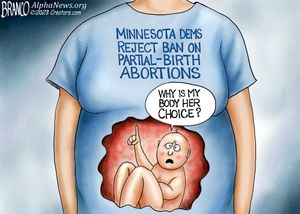




 />
/> Kristina Pimenova, once said to be the most beautiful girl in the world. Note blue eyes and blonde hair


 Bliss: What every woman wants: to feel safe and secure in the arms of her man. Robert Irwin and Rorie Buckey. See